

Sensitive skin is one of those terms that gets used so broadly it’s almost lost its meaning. It shows up on product labels, in skincare advice, and in conversations about skin, but what it actually describes is very specific: skin that reacts easily, stings when it shouldn’t, flushes without obvious reason, and breaks down when exposed to ingredients, environments, or products that other skin types handle without issue.
If that sounds familiar, the frustrating part is usually not the sensitivity itself, it’s that most skincare advice isn’t written for you. The standard recommendations assume a tolerance your skin doesn’t have, and following them often makes things worse rather than better.
This guide is specifically for sensitive skin. It covers what’s actually going on when skin reacts, how to build a routine that works with your skin rather than against it, and which ingredients make the biggest difference and which ones to avoid.
Affiliate disclosure: This post contains affiliate links. As an Amazon Associate, I earn from qualifying purchases at no extra cost to you.
What Makes Skin Sensitive?
Sensitive skin isn’t a single condition, it’s usually the result of a few different underlying factors, sometimes working together.
A Compromised Skin Barrier
The most common cause of skin sensitivity is a barrier that isn’t functioning the way it should. When the lipid structure of the outermost skin layer breaks down, from over-exfoliation, harsh products, environmental stressors, or genetics skin loses its ability to keep irritants out and moisture in. The result is skin that reacts to things it shouldn’t, stings when products are applied, and never quite feels comfortable.
Barrier repair is the foundation of any sensitive skin routine. If you’re not sure whether your barrier is currently compromised, the signs are covered in detail here: How to Know If Your Skin Barrier Is Damaged and How to Fix It.
Skin That’s Naturally More Reactive
Some people are simply born with skin that has a lower threshold for reaction. Rosacea, eczema, and other chronic skin conditions all involve a heightened inflammatory response that makes the skin more prone to redness, flushing, and sensitivity to external triggers.
This type of sensitivity doesn’t go away with the right routine, but the right routine makes it significantly more manageable.
Skin That’s Been Sensitized Over Time
This is more common than most people realize. Skin that was previously normal or combination can become sensitized through years of using products that are too harsh, over-exfoliating, or consistently using multiple active ingredients without enough recovery time. The skin adapts to being stressed, and what you’re left with is a reactive baseline that feels permanent but is often reversible with a more supportive approach.
The Principles of a Good Sensitive Skin Routine
Two things matter more than any product choice: fewer products and one new thing at a time. Every product you add is another potential source of reaction. And when you introduce multiple new products together and your skin reacts, you have no way of knowing which one caused it.
Fragrance-free is non-negotiable. It appears under dozens of names parfum, essential oils, botanical extracts. For sensitive skin, fragrance-free means fragrance-free, not “lightly scented.”
Rest nights are necessary, not wasted. Nights with just cleanser and moisturizer give your skin the recovery time it needs to repair
The Sensitive Skin Routine – Step by Step
Step 1: Cleanser
The cleanser is where more sensitive skin routines go wrong than anywhere else. Foaming cleansers that strip the skin, cleansers with high-fragrance formulas, and anything that leaves skin feeling tight or uncomfortable immediately afterward are all working against you before you’ve even started the rest of your routine.
For sensitive skin, a cream or gel cleanser that rinses clean without any stripping is the goal. The feeling you’re looking for after cleansing is comfortable and neutral, not squeaky, not tight, not dry.
What to look for: Fragrance-free, gentle surfactants, ideally with some hydrating base ingredients like glycerin. Avoid physical scrub particles, alcohol high on the ingredient list, and sulfates in the first few ingredients.
Morning cleanse: For sensitive skin, rinsing with lukewarm water in the morning is often enough. If your skin is comfortable with a gentle cleanser twice daily, that’s fine but the morning is where over-cleansing most often happens without people realizing it.
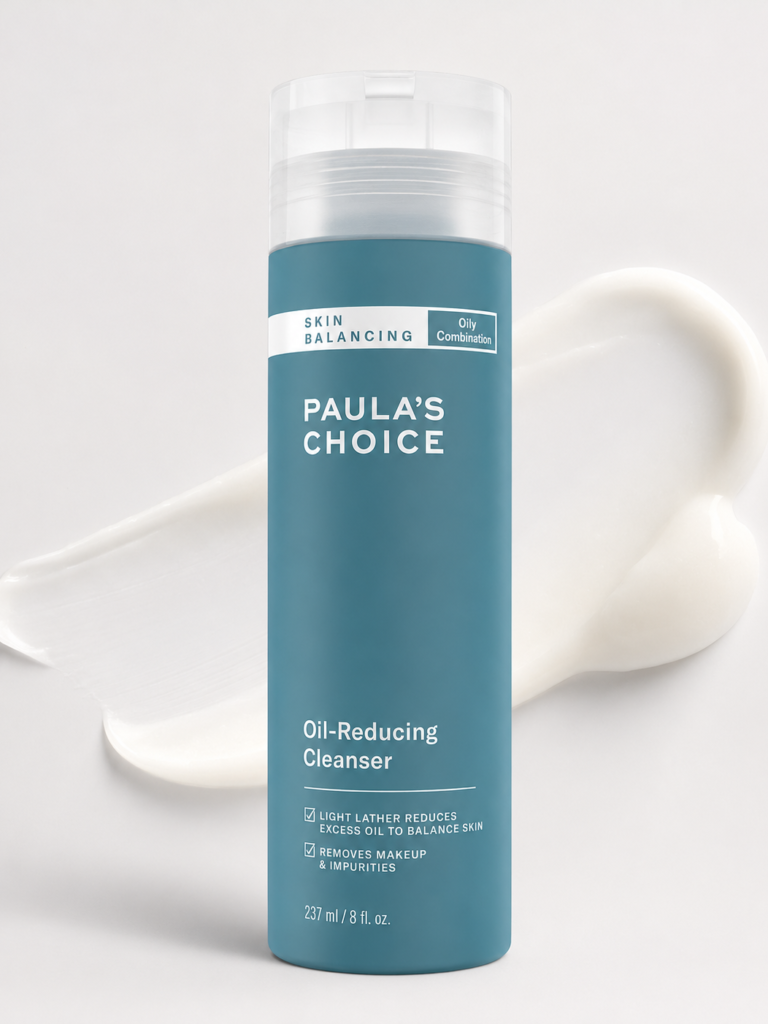
The cleanser I use for sensitive skin is Paula’s Choice Skin Balancing Oil-Reducing Cleanser it removes what needs to be removed without leaving my skin feeling anything other than comfortable.
Step 2: Hydrating Toner or Essence (Optional)
This step is worth considering for sensitive skin, but with a different goal than for other skin types. The point here isn’t to add a treatment layer, it’s purely hydration and prep. A gentle hydrating toner or essence applied after cleansing restores water content to the surface and helps the products that follow absorb more evenly.
If toner feels like too many steps or your skin doesn’t tolerate it well, skip it and move directly to serum or moisturizer. This is genuinely optional for sensitive skin.
What to look for: Hyaluronic acid, glycerin, panthenol, or Centella asiatica. Nothing with alcohol, witch hazel, or added fragrance.
Step 3: Serum – Targeted but Gentle
This is the step where sensitive skin needs the most thought. Active ingredients deliver results, but they also require tolerance and sensitive skin has less of it. That doesn’t mean skipping actives entirely. It means choosing them carefully and introducing them slowly.
Niacinamide – The Most Sensitive Skin-Friendly Active
If there’s one active ingredient that’s close to universally well-tolerated by sensitive skin, it’s niacinamide. It reduces inflammation, supports the barrier, helps regulate oil production, and gradually improves tone all without the adjustment period or potential for irritation that most other actives carry. It can be used morning and evening, doesn’t make skin photosensitive, and layers well with almost everything.
For sensitive skin dealing with redness, reactivity, or uneven tone, niacinamide is the best starting point for a treatment step. The full breakdown of what it does and how to use it is here: Niacinamide: What It Does for Your Skin and How to Use It the Right Way.
Vitamin C – With Caution
Vitamin C can be effective for sensitive skin, but L-ascorbic acid, the most potent form is also the most irritating. For sensitive skin, starting with a gentle derivative like ascorbyl glucoside or sodium ascorbyl phosphate is a better entry point. These convert to active vitamin C in the skin and deliver the same brightening and protective benefits with significantly less risk of stinging or redness. If you want to understand the full picture before introducing vitamin C, this covers it: How to Use Vitamin C Serum Without Irritating Your Skin.
Retinol – Last, and Very Slowly
Retinol is effective for sensitive skin, but it should be the last active ingredient you introduce, not the first. Start at the lowest available concentration, use it once a week initially, and always buffer it with moisturizer if your skin needs it. The process of introducing retinol to sensitive skin requires more patience than for other skin types, but it’s absolutely possible. The full guide is here: Retinol for Beginners: How to Start Without Irritation.
One active at a time. Always.
Step 4: Moisturizer
For sensitive skin, moisturizer is the most important step in the routine more important than any serum or treatment. A well-formulated moisturizer for sensitive skin repairs the barrier, locks in hydration, and creates a buffer between your skin and everything that might trigger it.
The ingredients that matter most here are ceramides (which directly rebuild barrier structure), fatty acids and cholesterol (which restore the lipid matrix alongside ceramides), panthenol (which soothes and supports healing), and glycerin or hyaluronic acid (which hold water in the skin).
Apply while skin is still slightly damp after the previous step to maximize hydration retention. For sensitive skin that’s currently going through a reactive period, applying two layers a lighter one immediately after cleansing and a richer one before bed can make a significant difference.
What to look for: Fragrance-free, simple ingredient list, ceramides and/or panthenol. Avoid added fragrance, essential oils, and unnecessary actives in the moisturizer itself your moisturizer’s job is to support and protect, not treat.
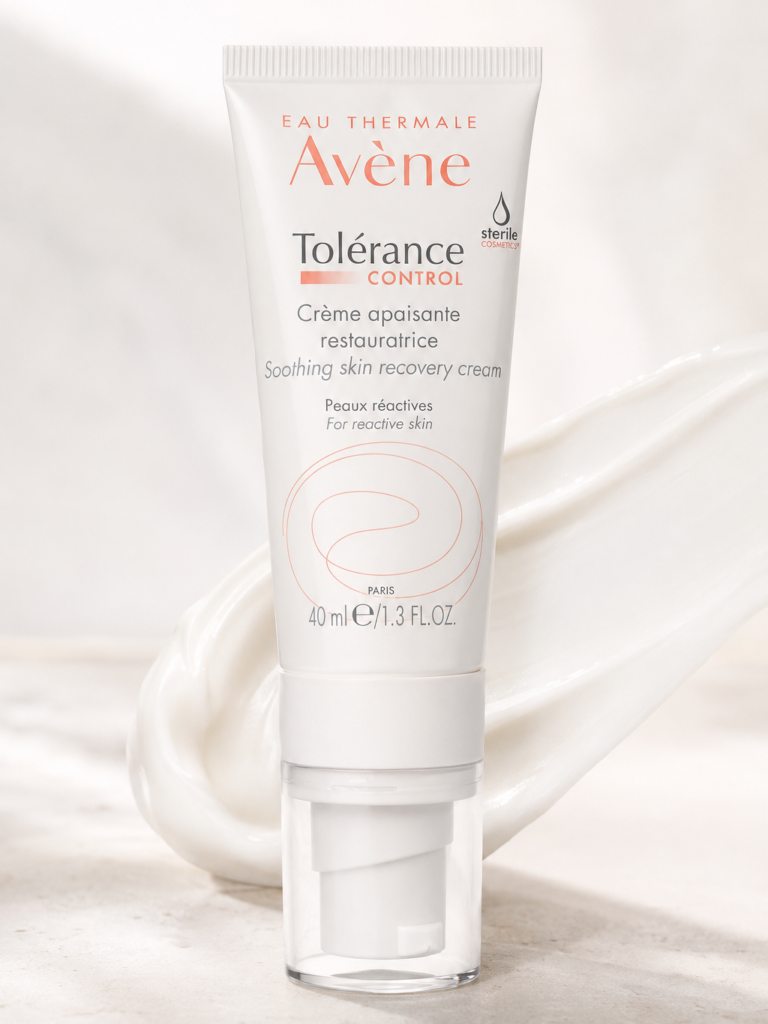
The moisturizer I rely on for sensitive skin is Avène Tolerance Control Soothing Skin Recovery Cream it calms reactivity without adding any potential irritants, and my skin consistently feels more settled by the next morning.
If your sensitive skin also feels dry or easily tight, my guide to the best Korean moisturizers for dry and sensitive skin is worth checking because many formulas focus on comfort, hydration, and barrier support.
Step 5: SPF – Every Single Morning
UV exposure is one of the most consistent triggers for sensitive skin reactivity and one of the primary drivers of the kind of cumulative damage that makes sensitivity worse over time. Daily SPF is not optional for sensitive skin; it’s one of the most protective things you can do.
For sensitive skin specifically, a mineral SPF zinc oxide, titanium dioxide, or both is worth prioritizing over chemical filters. Mineral filters sit on the surface of the skin rather than absorbing into it, which makes them significantly less likely to cause the stinging and redness that chemical filters can trigger on reactive skin.
What to look for: 100% mineral active ingredients, fragrance-free, broad-spectrum SPF 30 minimum SPF 50 is better. Lightweight formula that doesn’t leave a heavy cast.
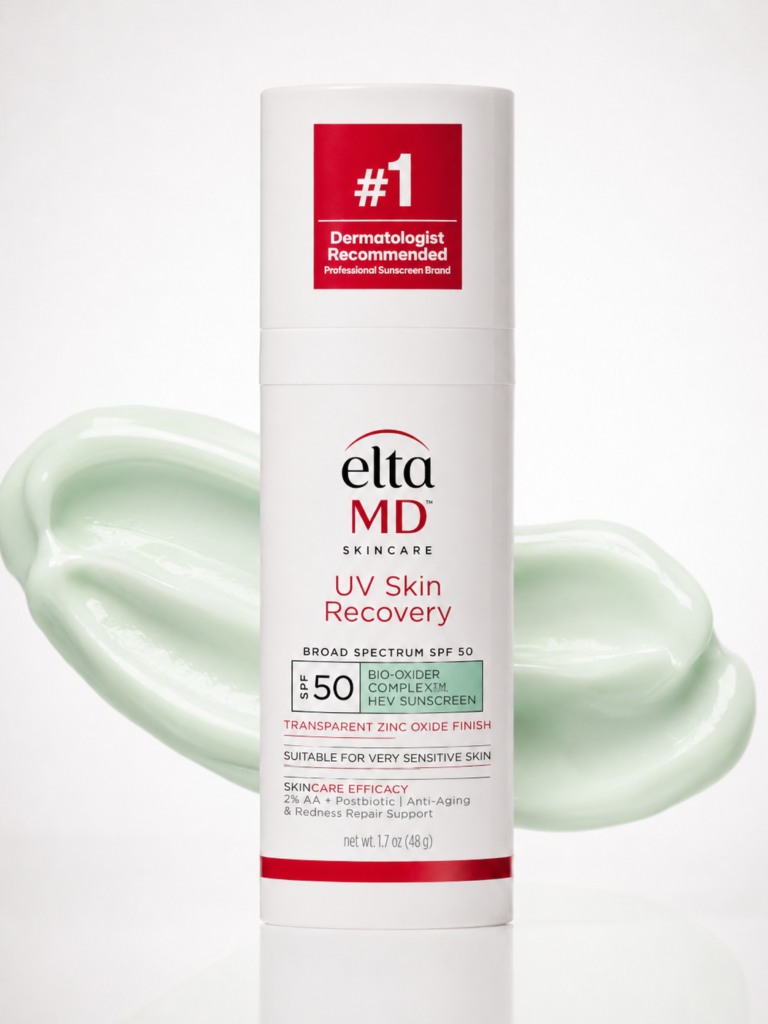
The SPF I use on sensitive skin days is EltaMD UV Skin Recovery Face Sunscreen 100% mineral, no white cast, and it’s never caused any stinging even when my skin was at its most reactive.
If mineral sunscreen usually feels heavy or uncomfortable, you can also compare the best Korean sunscreens for dry and sensitive skin to find gentler daily options that feel easier to wear.
Evening Routine for Sensitive Skin
The evening follows the same logic as the morning. If you’ve worn SPF or makeup, start with a gentle cleansing balm or oil to remove it before your regular cleanser sensitive skin tolerates a double cleanse better than a single cleanser working overtime.
For treatments, rotate rather than stack. Niacinamide most evenings, retinol once a week, and at least two rest nights. A richer moisturizer at night gives the barrier more to work with during the hours when repair is most active.
Ingredients Sensitive Skin Should Avoid
Fragrance and essential oils. The most common cause of skincare reactions across all skin types, but especially for sensitive skin. This includes “natural” fragrances lavender, citrus oils, and rose extract are all common sensitizers.
Alcohol (ethanol/denatured alcohol) high on the ingredient list. Drying and disruptive to the barrier, often used in toners and lightweight moisturizers to give a “quick-dry” finish.
Physical scrubs. Abrasive particles cause micro-tears in already-sensitive skin. Chemical exfoliation at low concentrations and low frequency is significantly gentler when exfoliation is needed.
High-concentration L-ascorbic acid. 15-20% vitamin C is too much for most sensitive skin to handle, especially without a long adjustment period. Derivatives are the better entry point.
Too many actives at once. Retinol and exfoliating acids in the same routine, or introducing multiple new products in the same week, overwhelms the barrier and creates more reactivity rather than less.
How Long Until Sensitive Skin Improves?
With a consistently gentle routine, most people notice improvement within four to six weeks less stinging, less reactivity, skin that tolerates products it previously couldn’t. More significant improvements in redness and overall resilience build over weeks six to eight, which is also when you can begin cautiously introducing targeted treatments.
Sensitive skin takes longer than other skin types and is less forgiving when the routine is disrupted. Consistency matters more here than anywhere else.
The Bottom Line
Sensitive skin doesn’t need a complicated routine it needs a careful one. The fewer products you use, the gentler they are, and the more consistently you use them, the better your skin responds over time.
Start with cleanser, moisturizer, and SPF. Add niacinamide when that foundation feels stable. Introduce vitamin C and retinol slowly, one at a time, when your skin is ready.
That’s the whole approach. It’s not fast, but it works and for sensitive skin, slow and steady is genuinely the only thing that does.
For a complete morning and evening routine framework that works as a starting point before customizing for sensitivity, My Simple AM & PM Skincare Routine for Glowing Skin has everything you need.