
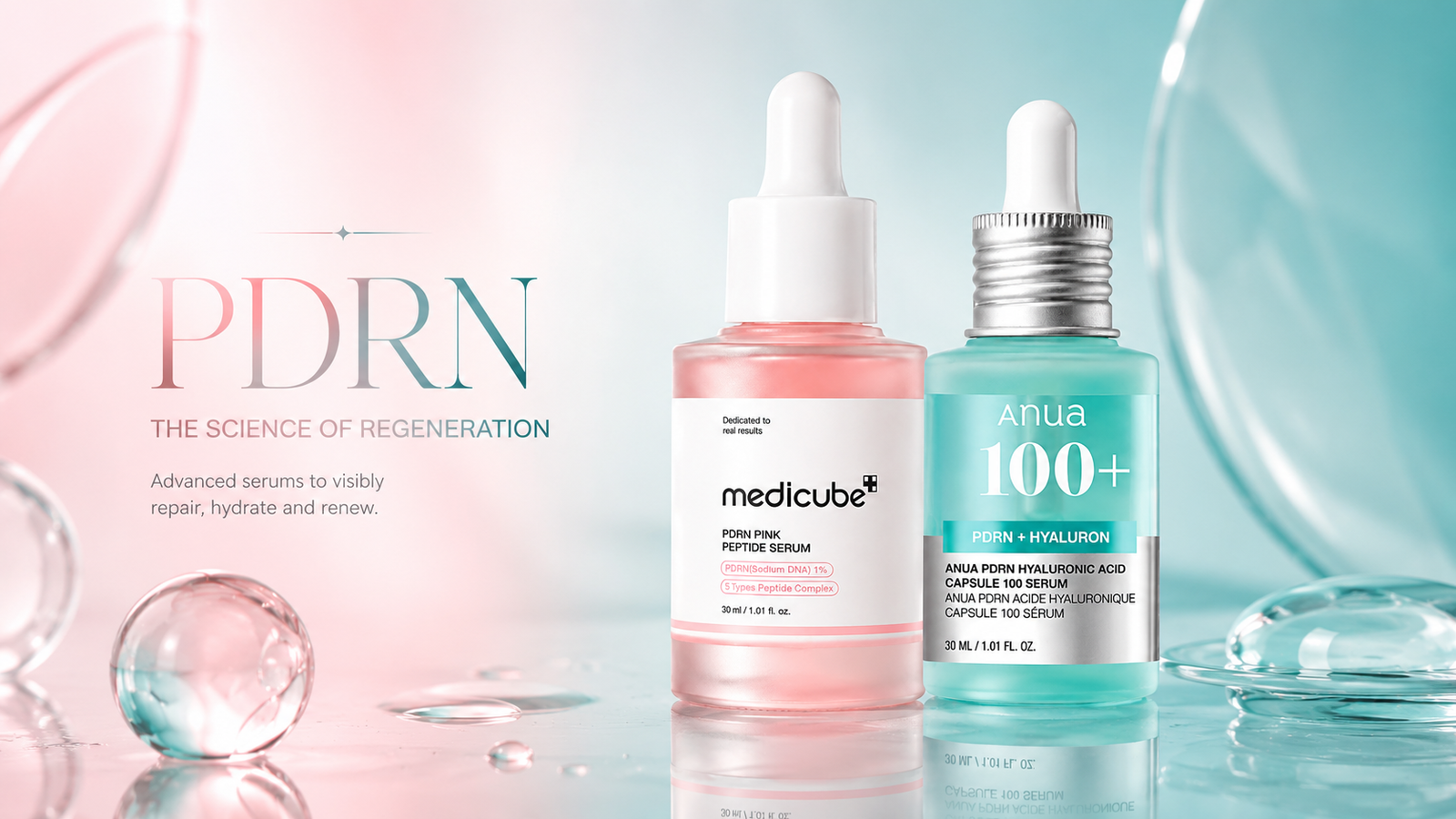
PDRN has moved quickly from professional skin treatments into Korean serums, creams and masks. You will often see it promoted as “salmon DNA,” with promises of firmer, smoother and more radiant skin.
There is real research behind the ingredient, but skincare marketing tends to skip an important detail: most of the stronger evidence does not come from an ordinary serum applied at home.
Topical PDRN may still be a useful hydrating and skin-conditioning ingredient. It simply should not be treated as an injectable treatment in a bottle.
Affiliate disclosure: This post contains affiliate links. As an Amazon Associate, I earn from qualifying purchases at no extra cost to you.
What Is PDRN?
PDRN stands for polydeoxyribonucleotide. It is a mixture of purified DNA fragments.
Many popular skincare products use salmon-derived PDRN. On the ingredient list, it may appear as Sodium DNA rather than the full name. Newer plant-derived versions also exist, although research on each type and formulation needs to be considered separately.
PDRN has been studied in connection with tissue repair, inflammation and skin regeneration. However, research includes several very different forms of use: laboratory experiments, injections, professional procedures and topical formulas.
That does not mean every PDRN serum will produce the same results.
What Can Topical PDRN Realistically Do?
The most realistic benefits depend on the complete formula, not PDRN alone.
Help Skin Feel More Hydrated
Many PDRN serums also contain familiar humectants such as glycerin and hyaluronic acid. These ingredients attract water and can make dehydrated skin feel softer and look temporarily plumper.
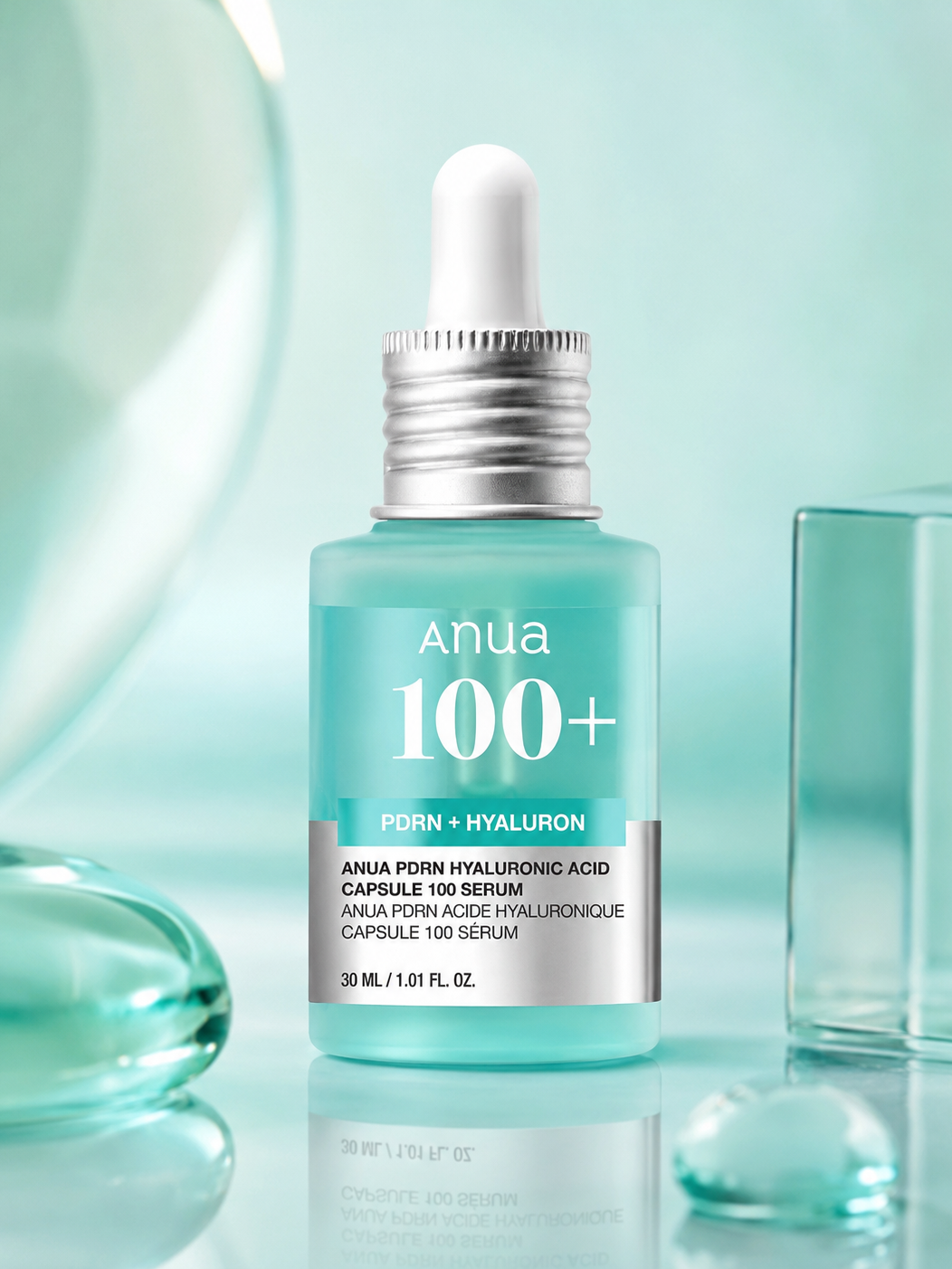
Anua PDRN Hyaluronic Acid Capsule 100 Serum, for example, combines Sodium DNA with glycerin, several forms of hyaluronic acid, niacinamide and hydrolyzed collagen. It makes the most sense as a lightweight hydrating serum for skin that looks dull or feels tight, rather than as a dramatic anti-aging treatment.
Someone whose main concern is dehydration may also want to compare it with the best Korean hydrating serums for dehydrated skin. A good hydrating formula does not need to contain PDRN to work well.
Support a Smoother, More Comfortable Appearance
Early studies suggest that certain PDRN materials may support processes connected with skin-barrier recovery, elasticity and the extracellular matrix.
A 2025 study of low-molecular-weight peony-derived PDRN reported improved barrier recovery in a small test involving skin temporarily irritated with sodium lauryl sulfate. The study also reported improved elasticity after four weeks. These results are promising, but they apply to one specific plant-derived material, and the barrier portion involved only ten participants.
This is not enough to conclude that every PDRN serum repairs a damaged barrier or noticeably firms the skin.
If your face suddenly stings, burns or reacts to products it previously tolerated, simplifying your routine is more important than adding a trendy serum. Our guide on how to know if your skin barrier is damaged explains what to look for.
Topical PDRN Is Not the Same as an Injectable Treatment
This is the biggest source of confusion around PDRN skincare.
Professional treatments place the material into or beneath the skin. A cosmetic serum stays on the surface and must work within the limits of its formula and the skin’s natural protective barrier.
Molecular size and delivery system can affect how much PDRN reaches and remains within the skin. Researchers are still developing lower-molecular-weight forms, capsules and lipid-based delivery systems partly for this reason. One laboratory study found that placing PDRN in nanoliposomes increased skin permeation and retention compared with unencapsulated PDRN. That shows why formulation matters, but it does not prove that every product using words such as “capsule” or “delivery technology” will produce major visible results.
A topical serum should therefore be judged as skincare – not as a needle-free alternative to an in-office procedure.
What Are the Limitations of PDRN Skincare?
PDRN is interesting, but several questions are still unresolved.
Topical evidence is still limited
Some studies involve laboratory cells, animal models, injections or professional delivery methods.
A frequently referenced 2022 study examined PDRN together with vitamin C and niacinamide delivered using microneedling, mainly in a UV-damaged animal model. It cannot tell us what PDRN alone would do in a regular serum applied to intact human skin.
Products are difficult to compare
Brands may describe the amount of PDRN in percentages, parts per million or proprietary complexes. A larger number on the packaging does not automatically mean a better product.
The source, molecular size, supporting ingredients and delivery system can all influence the formula.
Other ingredients may provide much of the visible benefit
When a serum contains hyaluronic acid, glycerin, niacinamide and peptides, those ingredients can contribute to hydration, softness and glow.
It is usually impossible to look at a smoother complexion and know exactly how much of the result came from PDRN.
It does not replace proven basics
PDRN should not replace sunscreen, moisturizer or an established treatment for your main skin concern.
It is also not automatically an alternative to retinoids when fine lines and photoaging are the priority. Our guide to the best anti-aging ingredients that actually work explains which ingredients currently have stronger support.
Who Is PDRN Skincare Best For?
A topical PDRN serum may be worth considering when your skin:
- feels dehydrated or temporarily tight;
- looks dull or less plump than usual;
- has mild texture or early firmness concerns;
- does not tolerate stronger anti-aging ingredients well;
- needs a gentle, supportive serum rather than another exfoliant.
It may be most appealing to someone who already has a basic routine in place and wants to add one hydrating, skin-conditioning product.
PDRN is not specifically an acne treatment, pore treatment or solution for persistent dark spots. A serum may contain other ingredients that address those concerns, but that is different from PDRN itself treating them.
Who Probably Does Not Need It?
You can probably skip PDRN when:
- your current routine already keeps your skin comfortable;
- you are expecting results similar to injections;
- you are buying it only because the ingredient is trending;
- your routine already contains several similar hydrating serums;
- your main concern requires a more targeted ingredient.
People who avoid animal-derived skincare should also check the source carefully. Salmon-derived PDRN is not vegan, while some brands now offer formulas made with plant-derived DNA material.
How to Choose a PDRN Product
Start with your skin concern rather than the concentration printed on the bottle.
For dehydration, look for glycerin, hyaluronic acid, betaine or panthenol. Dry skin may benefit from a creamier formula with ceramides, squalane or other emollient ingredients.
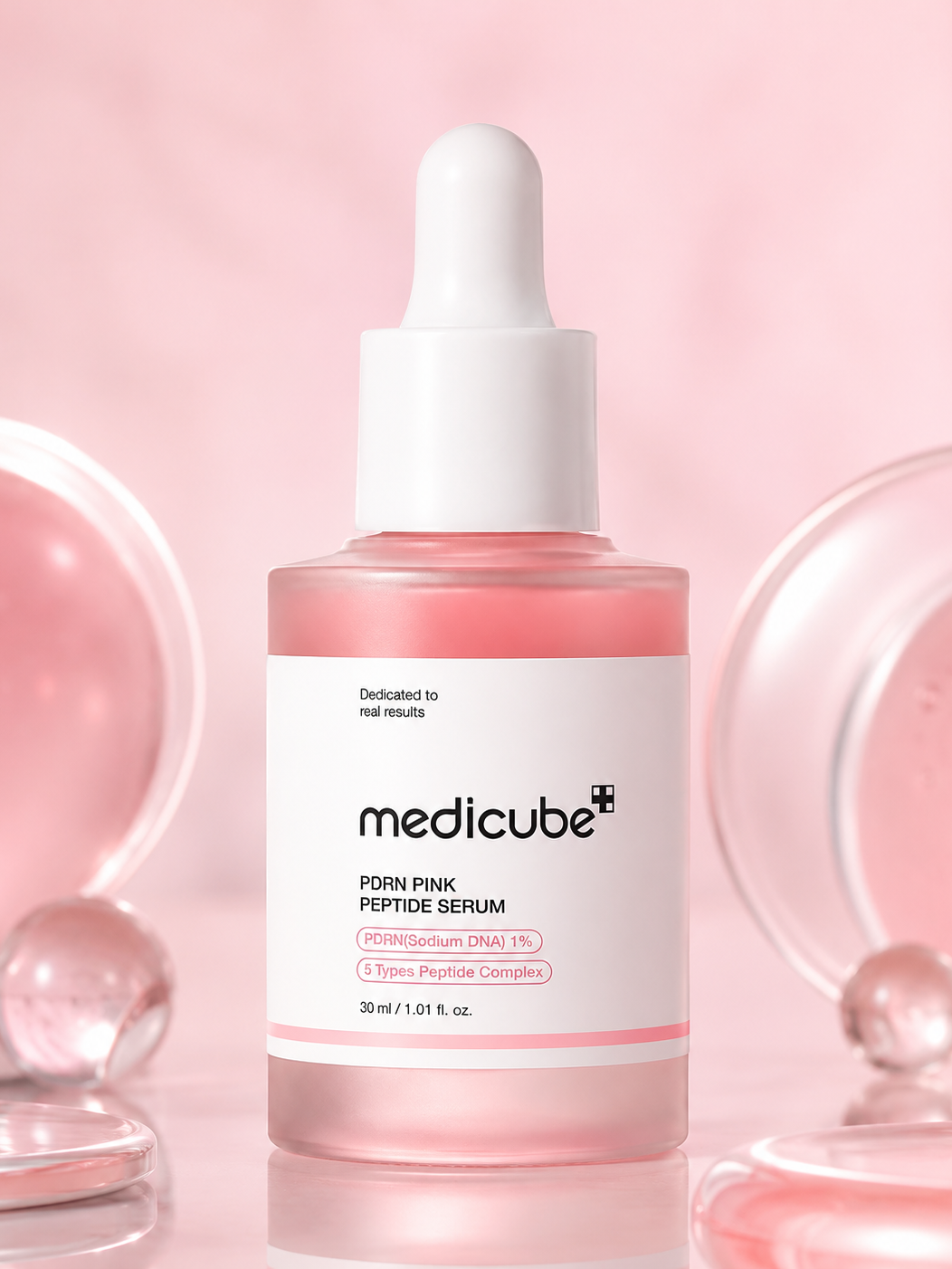
For a formula that combines hydration with ingredients aimed at dullness and firmer-looking skin, Medicube PDRN Pink Peptide Serum contains salmon-derived PDRN alongside niacinamide and peptides. It should be evaluated as a complete multi-ingredient serum, not as proof that PDRN alone can correct wrinkles or uneven tone.
Also consider:
The source: Check whether the PDRN is salmon-derived or plant-derived.
The texture: Lightweight serums usually suit combination skin more easily, while dry skin may prefer a richer formula.
The rest of your routine: A new PDRN serum may be unnecessary when you already use several hydrating products.
The claims: Be cautious with language suggesting skin regeneration, erased wrinkles or results comparable to professional treatments.
How to Use PDRN in Your Routine
Apply a PDRN serum after cleansing and any watery toner or essence, but before moisturizer.
A simple routine could look like this:
Cleanser
Toner or essence, if needed
PDRN serum
Moisturizer
Sunscreen in the morning
One PDRN product is enough. There is little reason to use a PDRN toner, essence, serum and cream in the same routine.
Most cosmetic PDRN serums can be used alongside ingredients such as hyaluronic acid, niacinamide, peptides and ceramides. Compatibility with retinoids or exfoliating acids depends more on the complete formula and your skin’s tolerance than on PDRN itself.
Introduce the product gradually if your skin reacts easily, and stop using it if you develop persistent irritation.
Our skincare routine order guide explains where the rest of your treatments and moisturizers belong.
When Should You Expect Results?
A serum containing humectants may make the skin feel hydrated or look temporarily plumper soon after application.
Changes involving texture, fine lines or firmness would take longer and may be subtle. There is no reliable timeline that applies to every topical PDRN product because formulas, concentrations and delivery systems differ.
Give the product enough time to fit into your routine, but do not confuse an immediate glossy finish with permanent skin renewal.
The Bottom Line
PDRN is a promising skincare ingredient, but it is not yet as proven in topical cosmetics as current marketing sometimes suggests.
A well-formulated PDRN serum may provide hydration, comfort and a smoother, plumper appearance. Claims about significant barrier repair, collagen production or wrinkle reduction require more independent research on ordinary leave-on products.
Choose it because the complete formula suits your skin, not because “salmon DNA” sounds more advanced than the ingredients you already use.
For many people, PDRN will be a pleasant optional serum. It is not an essential step, and it should not replace the basics that already have a clear purpose in a healthy skincare routine.