

Niacinamide, vitamin C, and retinol can work very well in the same skincare routine. Together, they can help with dullness, uneven-looking tone, post-acne marks, excess oil, rough texture, fine lines, and barrier support.
The confusing part is knowing when to use each one.
The good news is that you do not need to apply all three in the same routine. For most people, the easiest approach is vitamin C in the morning, retinol at night, and niacinamide wherever it fits best.
Affiliate disclosure: This post contains affiliate links. As an Amazon Associate, I earn from qualifying purchases at no extra cost to you.
Can You Use Vitamin C, Niacinamide, and Retinol Together?
Yes. These ingredients do not cancel each other out, but that does not mean you should introduce all three at once. Niacinamide is the most flexible. It can usually be used with vitamin C in the morning or with retinol in the evening. Vitamin C and retinol are often separated simply because this keeps the routine easier to tolerate. Vitamin C fits naturally into a morning routine, while most retinol products are designed for evening use. You can adjust the routine depending on your skin and the products you already use.
What Each Ingredient Does
Vitamin C
Vitamin C is an antioxidant that helps protect the skin from environmental stress. With consistent use, it can also brighten a dull complexion and improve the appearance of dark spots and uneven-looking tone. It is commonly used in the morning, followed by moisturizer and sunscreen. Vitamin C does not replace SPF, but it can be a useful addition to a well-rounded morning routine.
The full guide on how to use vitamin C correctly: How to Use Vitamin C Serum Without Irritating Your Skin.
Niacinamide
Niacinamide supports the skin barrier and can help improve the appearance of excess oil, redness, uneven tone, and enlarged pores. It is generally well tolerated and can be used in the morning, evening, or both. However, using it twice a day is not necessary for everyone, especially when the product contains a higher concentration.
You can learn more in: Niacinamide: What It Does for Your Skin and How to Use It the Right Way.
Retinol
Retinol is one of the most studied over-the-counter ingredients for improving the appearance of fine lines, uneven texture, dark spots, and breakouts. It can also cause dryness, peeling, or irritation when introduced too quickly. Starting with a low-strength formula and using it only a few evenings a week is usually more effective than choosing a strong product you cannot tolerate consistently.
For a complete beginner guide, read: Retinol for Beginners: How to Start Without Irritation.
If you are ready to choose a formula, my guide to the best retinol serums for beginners can help you find gentler options that are easier to introduce without overwhelming your skin.
Do Vitamin C and Niacinamide Conflict?
No. The idea that vitamin C and niacinamide cancel each other out comes from older research that does not reflect the way modern skincare products are formulated and used. Many people can apply them in the same routine without any problem, and some products even combine both ingredients.
If your skin is sensitive, you can still keep things simple by using vitamin C in the morning and niacinamide in the evening. This is not necessary because the ingredients conflict, but it may make it easier to identify which product is causing irritation if your skin reacts.
How to Layer Vitamin C and Niacinamide in the Morning
A simple morning routine looks like this:
Cleanser → vitamin C → niacinamide → moisturizer → sunscreen
When both products are lightweight serums, applying vitamin C first is a practical default. However, texture also matters. In general, apply the thinner formula before the thicker one. There is no need to wait ten or fifteen minutes between serums. Let the first product settle, then continue with the next step. Niacinamide is optional here. If your vitamin C serum, moisturizer, or sunscreen already contains it, you may not need a separate niacinamide serum.
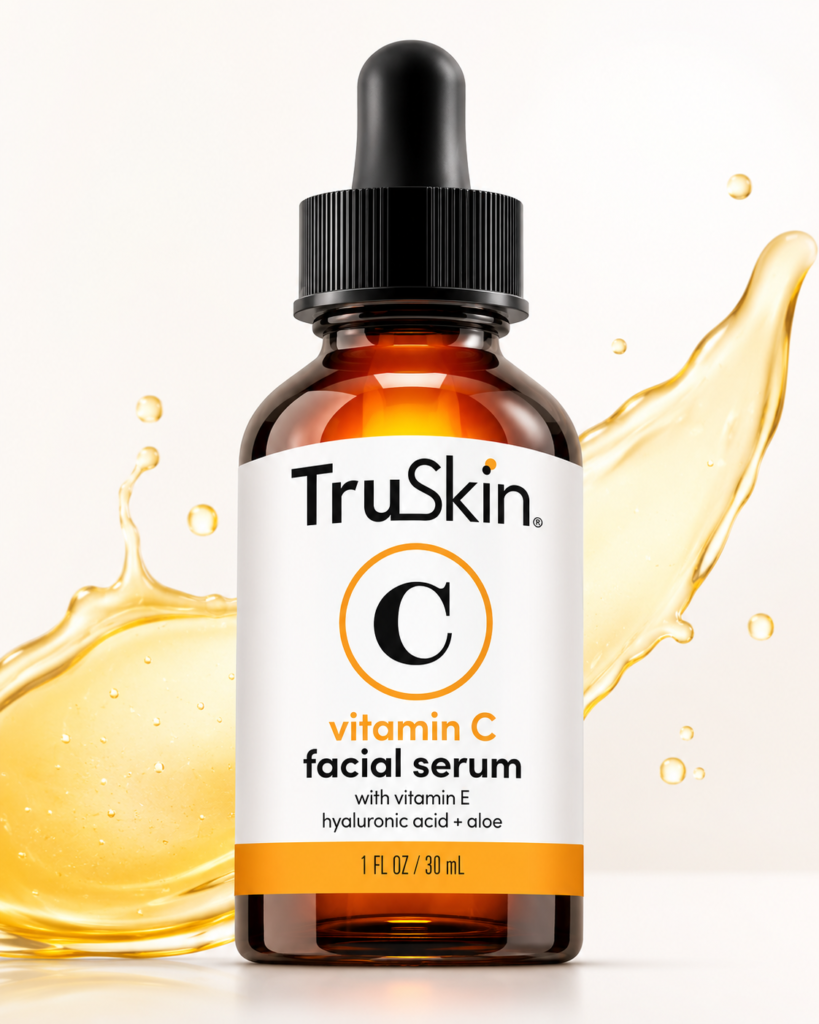
For people who find strong L-ascorbic acid formulas irritating, TruSkin Vitamin C Serum is a gentler option to consider. It uses a vitamin C derivative and has a lightweight texture that fits easily under moisturizer and sunscreen.
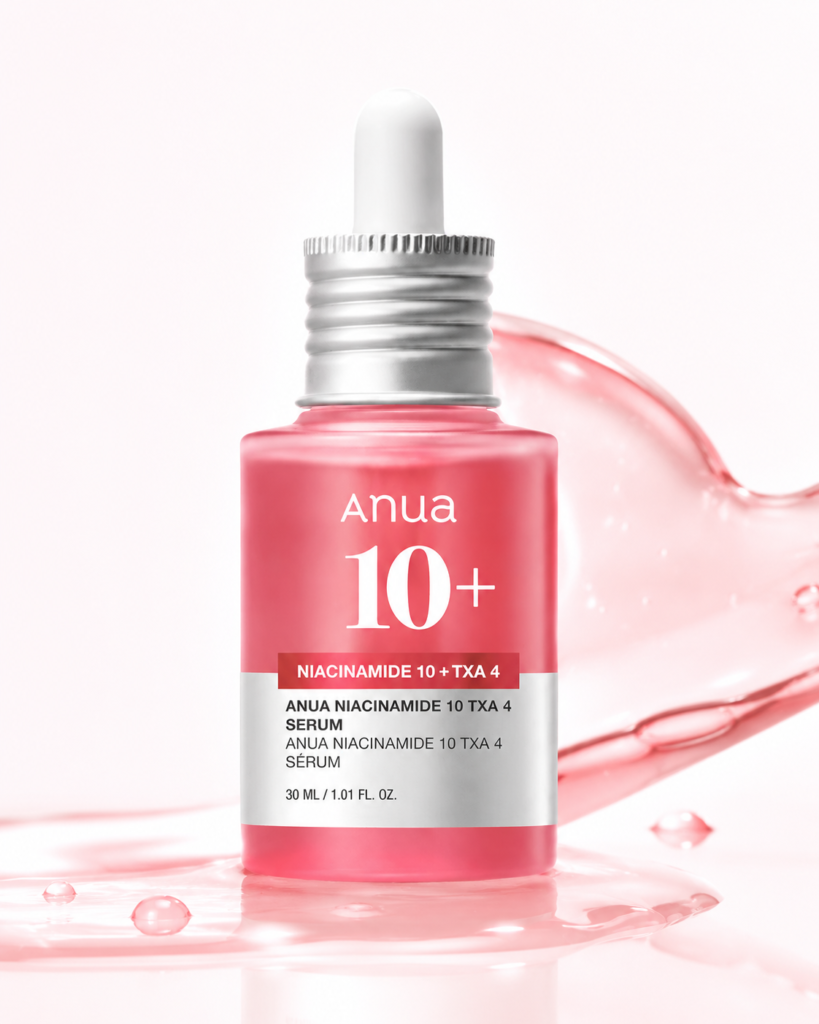
If uneven-looking tone and post-acne marks are your main concern, Anua Niacinamide 10% + TXA 4% combines niacinamide with tranexamic acid and arbutin. Because it is a concentrated formula, sensitive skin may do better starting with it a few times a week rather than using it twice a day immediately.
How to Layer Niacinamide and Retinol at Night
A basic evening routine looks like this:
Cleanser → niacinamide → retinol → moisturizer
This order works well when the niacinamide is a lightweight, water-based serum and the retinol has a richer or oil-based texture. Niacinamide does not have to be used before retinol. It is an optional supporting step, not a requirement.
If your routine feels sticky, heavy, or starts pilling, simplify it:
Cleanser → retinol → moisturizer

For beginners, The Ordinary Retinol 0.2% in Squalane is a reasonable starting option. The 0.2% concentration is lower than many stronger retinol serums, while the squalane base gives it a richer texture.
Because it is oil-based, apply it after water-based serums and before a heavier moisturizer.
What to Do on Non-Retinol Nights
You do not need to use retinol every evening.
On the nights when you are not using it, your routine can be as simple as:
Cleanser → niacinamide → moisturizer
You can also skip niacinamide and use only cleanser and moisturizer.
Rest nights are especially helpful if your skin feels tight, dry, sensitive, or unusually reactive. Adding more active ingredients is not always the answer. Sometimes the best thing you can do is give your skin a quiet evening.
The Retinol Sandwich Method
If retinol causes dryness or irritation, the sandwich method may make it easier to tolerate.
Apply the products in this order:
Cleanser
A light layer of moisturizer
Retinol
Another layer of moisturizer
Allow the first layer of moisturizer to settle before applying retinol. This method buffers the product and can be useful for dry, sensitive, or reactive skin. You do not need to use it if your skin already tolerates retinol well.
Do not introduce retinol while your skin is burning, peeling heavily, or stinging when you apply basic products. Those signs may mean your barrier needs time to recover first.
Read How to Know If Your Skin Barrier Is Damaged and How to Fix It before adding more actives to an already irritated routine.
Mistakes That Make This Routine Harder Than It Needs to Be
Introducing All Three Products at Once
If your skin reacts, you will not know which product caused it. Add one new product at a time and use it consistently for a while before introducing the next one.
Starting Retinol Every Night
Retinol does not need to be used daily to be worthwhile. For beginners, two evenings a week is often enough. Increase the frequency only when your skin is comfortable and showing no persistent irritation.
Using Retinol and Exfoliating Acids Together Too Soon
Retinol and AHA or BHA exfoliants can both be part of the same overall routine, but using them on the same night may be too irritating, especially for beginners. Keep them on separate evenings until you understand what your skin can tolerate.
Assuming Stronger Is Always Better
A higher percentage does not automatically mean better results. A 10% niacinamide serum may be too much for some sensitive skin types, while a strong retinol can cause enough irritation to make consistent use impossible. The best product is usually the one you can use regularly without damaging your skin barrier.
Applying Too Much Retinol
A pea-sized amount is enough for the entire face. Using more will not produce faster results, but it can increase dryness and irritation.
Applying Retinol to Damp Skin
Retinol may feel more irritating when applied to damp skin because the product can penetrate more quickly. After cleansing, allow your skin to dry before applying it. Vitamin C and niacinamide do not always require the same rule, so follow the instructions provided with the individual product.
Skipping Sunscreen
Daily sunscreen is essential when retinol is part of your routine. Vitamin C can support your morning skincare, but it cannot replace broad-spectrum SPF.
How to Introduce All Three Ingredients
You do not need a complicated eight-week schedule. The main rule is to introduce one new product at a time. Start with the ingredient that best matches your main concern. If dullness and dark spots are the priority, begin with vitamin C in the morning. If oiliness, redness, or barrier support are more important, start with niacinamide. Introduce retinol last and begin with two evenings a week.
Once your skin is comfortable with each product individually, you can combine them into a routine like this:
Morning
Cleanser → vitamin C → niacinamide if needed → moisturizer → sunscreen
Two or Three Evenings a Week
Cleanser → niacinamide if needed → retinol → moisturizer
Other Evenings
Cleanser → hydrating serum or niacinamide → moisturizer
There is no reason to increase retinol frequency if two or three nights a week are working well for your skin.
How Long Does It Take to See Results?
Niacinamide may improve oiliness, redness, and overall skin comfort within several weeks.
Vitamin C and retinol usually need more time. Changes in dark spots, texture, and fine lines often take several weeks or months of consistent use.
Using all three ingredients does not make each one work faster. It simply allows you to address different concerns within the same routine.
The Bottom Line
Vitamin C fits most naturally into the morning, while retinol is usually used at night. Niacinamide is the flexible step and can be paired with either one. You do not need to apply all three at once, and you do not need to use every active ingredient every day.
Keep the routine simple, introduce new products gradually, and reduce the frequency if your skin becomes persistently dry or irritated. For a complete routine showing where cleansers, serums, moisturizers, and sunscreen fit together, read My Simple AM & PM Skincare Routine for Glowing Skin.