

You’ve heard that vitamin C serum is one of the best things you can add to your skincare routine brighter skin, more even tone, better protection from sun damage. So, you buy one, use it a few mornings in a row, and then your skin starts stinging, turning red, or breaking out in a way it never did before. Sound familiar?
This is one of the most common beginner experiences with vitamin C, and it almost always comes down to how it was introduced, not to the ingredient itself. This guide explains exactly why vitamin C causes irritation, how to start using it correctly, what to layer it with, and what to avoid so you can actually get the results it’s known for.
What Does Vitamin C Actually Do for Your Skin?
Vitamin C is an antioxidant, which means its primary job is to neutralize free radicals, the unstable molecules generated by UV exposure and pollution that break down collagen and cause uneven pigmentation over time. That protection is why vitamin C works best in the morning, when your skin is about to face those stressors.
Beyond protection, vitamin C also interferes with melanin production, which means it gradually lightens existing dark spots, evens out skin tone, and gives the complexion that clearer, more luminous quality that makes skin look healthy rather than flat. Used consistently, it’s one of the most effective ingredients available for brightening dull skin.
If you’re building a morning routine specifically for dullness and uneven tone, this guide Why Your Skin Still Looks Dull in the Morning (And How to Fix It) shows exactly how vitamin C fits into the full sequence.
Why Does Vitamin C Irritate Skin?
Vitamin C irritation usually comes from one of three things: the wrong form, too high a concentration, or the wrong timing in the routine.
The Form Matters More Than Most People Realize
Not all vitamin C is the same. The most potent and well-researched form is L-ascorbic acid, but it’s also the most acidic and the most likely to cause stinging and redness, especially at higher concentrations. Many beginner formulas use it because it’s effective, but they don’t always make it clear that pH-sensitive skin needs time to adjust.
Vitamin C derivatives, like ascorbyl glucoside, sodium ascorbyl phosphate, or ascorbyl tetraisopalmitate are gentler, more stable versions that convert to active vitamin C in the skin. They’re slower-acting than L-ascorbic acid, but significantly better tolerated by sensitive or reactive skin.
Concentration
A 20% L-ascorbic acid formula on skin that has never used vitamin C before is a reliable way to end up with a red, irritated face. Higher concentration doesn’t mean faster results for a beginner; it usually just means more irritation.
Layering It Wrong
Applying vitamin C on damp skin, right after a toner that’s still wet on the surface, or directly before an active serum, increases absorption in a way that often crosses the threshold into irritation territory. The order and the dryness of the skin at the time of application both matter.
How to Start Using Vitamin C Without Irritation
Start with a Lower Concentration
For beginners, 10% L-ascorbic acid is a reasonable starting point, effective enough to deliver results, low enough that most skin can adjust without major issues. If your skin is sensitive or reactive, start with a derivative formula instead and work up from there.
There’s no reward for jumping straight to 15% or 20%. Those concentrations make sense for skin that’s already built tolerance, not for someone using vitamin C for the first time.
Apply It Every Morning, But Build Up Slowly If Needed
Vitamin C works through daily, cumulative use. The protective and brightening effects compound over time, so consistency matters more than intensity. Once-a-day morning use is the target.
That said, if your skin is sensitive or you’ve had reactions before, starting with every other morning for the first week or two is a reasonable way to let your skin adjust before committing to daily use.
Always Apply to Dry Skin
After cleansing or toner, wait until your skin is completely dry before applying vitamin C. Damp skin increases absorption, which sounds positive but often just increases irritation, especially with L-ascorbic acid. Dry skin gives you more controlled absorption and a gentler experience.
Use a Small Amount
A few drops are enough for the full face. More product doesn’t mean faster results. It means a higher chance of irritation and a faster-depleting bottle.
Where Does Vitamin C Go in Your Routine?
Vitamin C goes on after cleansing and toner, and before moisturizer. It’s a water-based serum, so it sits underneath heavier products, not on top of them.
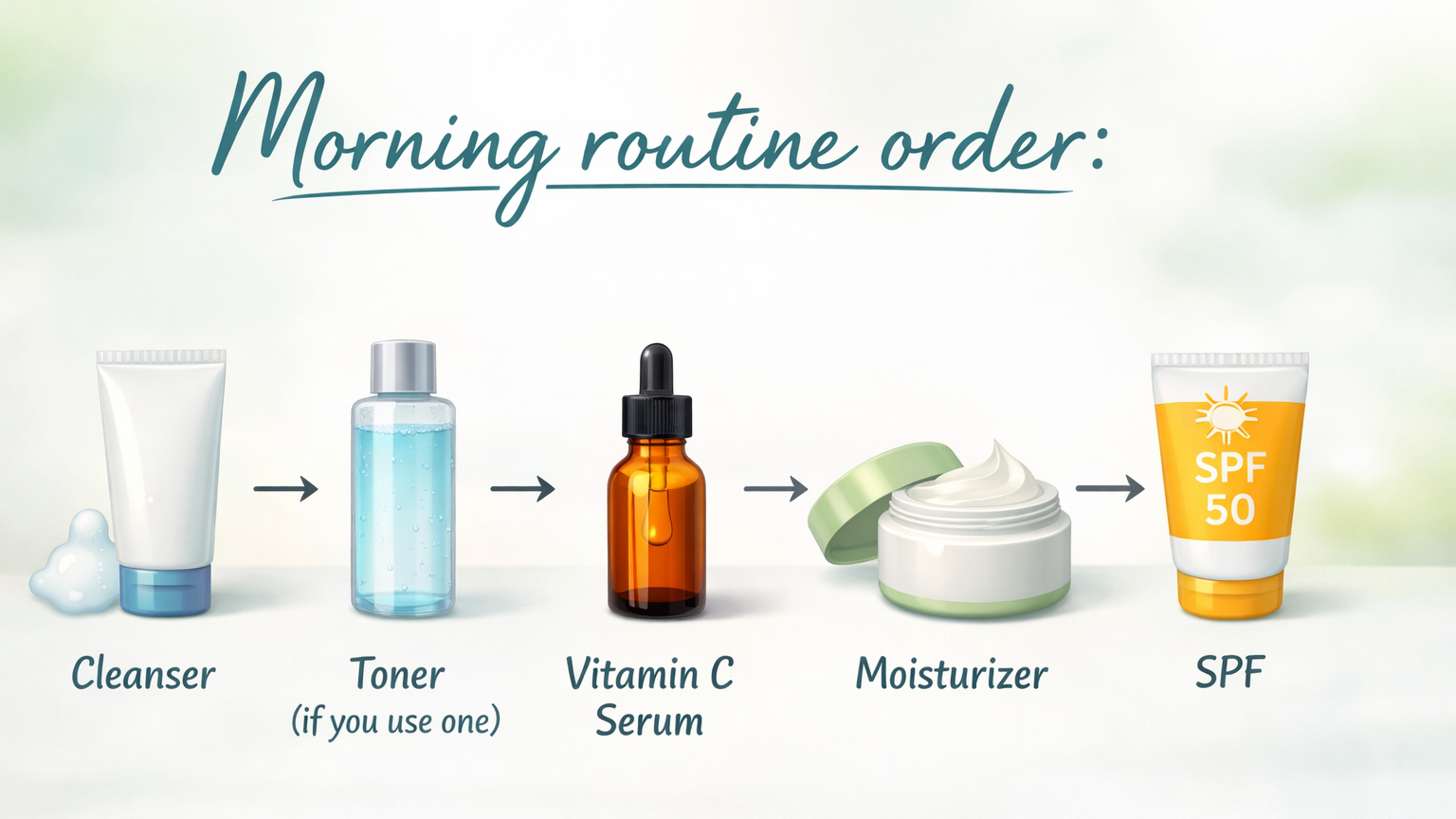
Do not apply vitamin C after moisturizer. The moisturizer creates a layer that prevents it from reaching the skin properly. And do not skip the SPF afterward, vitamin C and sunscreen work together, and one without the other is a missed opportunity. For a full breakdown of why layering order matters, this [skincare routine order guide] explains the logic behind every step.
What Not to Mix with Vitamin C
Some combinations reduce how well vitamin C works. Others actively cause irritation.
Niacinamide, The Myth Worth Clearing Up
You’ve probably seen warnings about mixing vitamin C and niacinamide. The concern that they cancel each other out or cause flushing comes from older research that doesn’t hold up well under modern testing. Current evidence suggests that using them together is fine for most people, and some formulas contain both intentionally.
If your skin is sensitive, applying them in separate steps with a few minutes between is a sensible precaution. But there’s no strong reason to avoid the combination entirely.
AHA and BHA Exfoliants
Using glycolic acid, lactic acid, or salicylic acid in the same session as vitamin C is too much for most skin to handle comfortably, especially in the beginning. Keep exfoliants in your evening routine and vitamin C in the morning, they don’t need to share a time slot to both be effective.
Retinol
Retinol and vitamin C are both effective ingredients, but they work best at different times of day and don’t need to be layered together. Vitamin C in the morning, retinol in the evening, clean separation, no conflict. If you’re just starting with retinol and want to know how to introduce it without irritation, this Retinol for Beginners: How to Start Without Irritation covers the full process.
Benzoyl Peroxide
Benzoyl peroxide can oxidize vitamin C and reduce its effectiveness. If you use benzoyl peroxide as part of an acne routine, keep it separate from your vitamin C application.
What If Vitamin C Stings?
Mild tingling with L-ascorbic acid formulas is normal, especially when you first start. It’s pH-related, the acid nature of the formula is part of what makes it effective.
What’s not normal: burning that doesn’t settle within a minute or two, visible redness that lasts more than a few minutes, or skin that feels raw or irritated after application.
If you’re experiencing the second group of symptoms, the formula is too strong or too acidic for your skin right now. Switch to a lower concentration, try a derivative formula, or apply moisturizer first as a buffer before the serum the same logic as the sandwich method used with retinol.
Sensitive skin does better with derivative forms of vitamin C consistently. It’s not a compromise; it’s just a different entry point that leads to the same results with less friction.
Does Vitamin C Go Bad?
Yes, and this is one of the most practical things to understand about this ingredient.
Vitamin C oxidizes when exposed to light, heat, and air. An oxidized serum turns yellow, then orange, then brown. Once it’s significantly discolored, it has degraded and won’t deliver the same antioxidant benefit.
To slow oxidation: store your serum in a cool, dark place (not in direct sunlight on a bathroom shelf), close it properly after each use, and consider travel-sized bottles if you’re slow to finish a full-size product.
A fresh, properly stored vitamin C serum works significantly better than an old or poorly stored one.
How Long Does Vitamin C Take to Work?
This is where most beginners lose patience and it’s worth being honest about the timeline upfront.
Weeks 1-2: Your skin is mostly adjusting. Some people notice their skin looks slightly brighter, but this is often the hydrating base of the formula rather than the vitamin C itself doing its brightening work yet.
Weeks 3-6: With consistent daily use, you may start to notice more even tone in areas where you have minor discoloration. The surface looks cleaner and slightly more luminous.
Week 8 and beyond: This is when the cumulative effect becomes clearly visible, more even pigmentation, a generally brighter complexion, and the long-term protective benefit starts to compound.
Vitamin C is not a fast-acting ingredient. It’s a consistent one. If you switch products or stop using it every few weeks because you’re not seeing dramatic changes, you reset the process each time.
Who Should Be Extra Careful with Vitamin C?
Vitamin C is well-tolerated by most skin types, but a few situations call for extra caution.
If your skin barrier is currently compromised chronically dry, irritated, or reactive, introducing vitamin C before repairing the barrier usually makes things worse. Barrier repair comes first.
Very sensitive or rosacea-prone skin tends to do better with derivative forms of vitamin C rather than L-ascorbic acid, and at lower concentrations. Starting slowly and paying attention to how your skin responds is more important than following a specific product recommendation.
The Most Common Vitamin C Mistakes
Starting with too high a concentration. 20% L-ascorbic acid is not a beginner formula. Start lower and build from there.
Using it on damp skin. Wait until skin is completely dry after cleansing or toner before applying.
Keeping an oxidized serum. A brown or dark orange serum is not still working. Replace it.
Giving up too soon. Six to eight weeks minimum before you can accurately evaluate whether a vitamin C serum is delivering results for your skin.
Skipping SPF afterward. Vitamin C without daily sunscreen is like doing half the job. The protection and the brightening both depend on SPF completing the equation.
Vitamin C Works but Patience Is Part of the Process
Vitamin C is one of the most consistently effective ingredients in skincare, but it earns its results over weeks and months, not overnight. Start with a concentration your skin can handle, apply it to dry skin every morning before moisturizer, always follow with SPF, and give it enough time to actually show what it can do.
The beginners who get the best results from vitamin C are the ones who introduce it carefully and stick with it long enough to let it work. That’s the whole strategy. It’s not complicated, it just requires consistency.
If you’re still building your core morning routine and want to see how vitamin C fits into the full picture, this My Simple AM & PM Skincare Routine for Glowing Skin is a good place to start.