
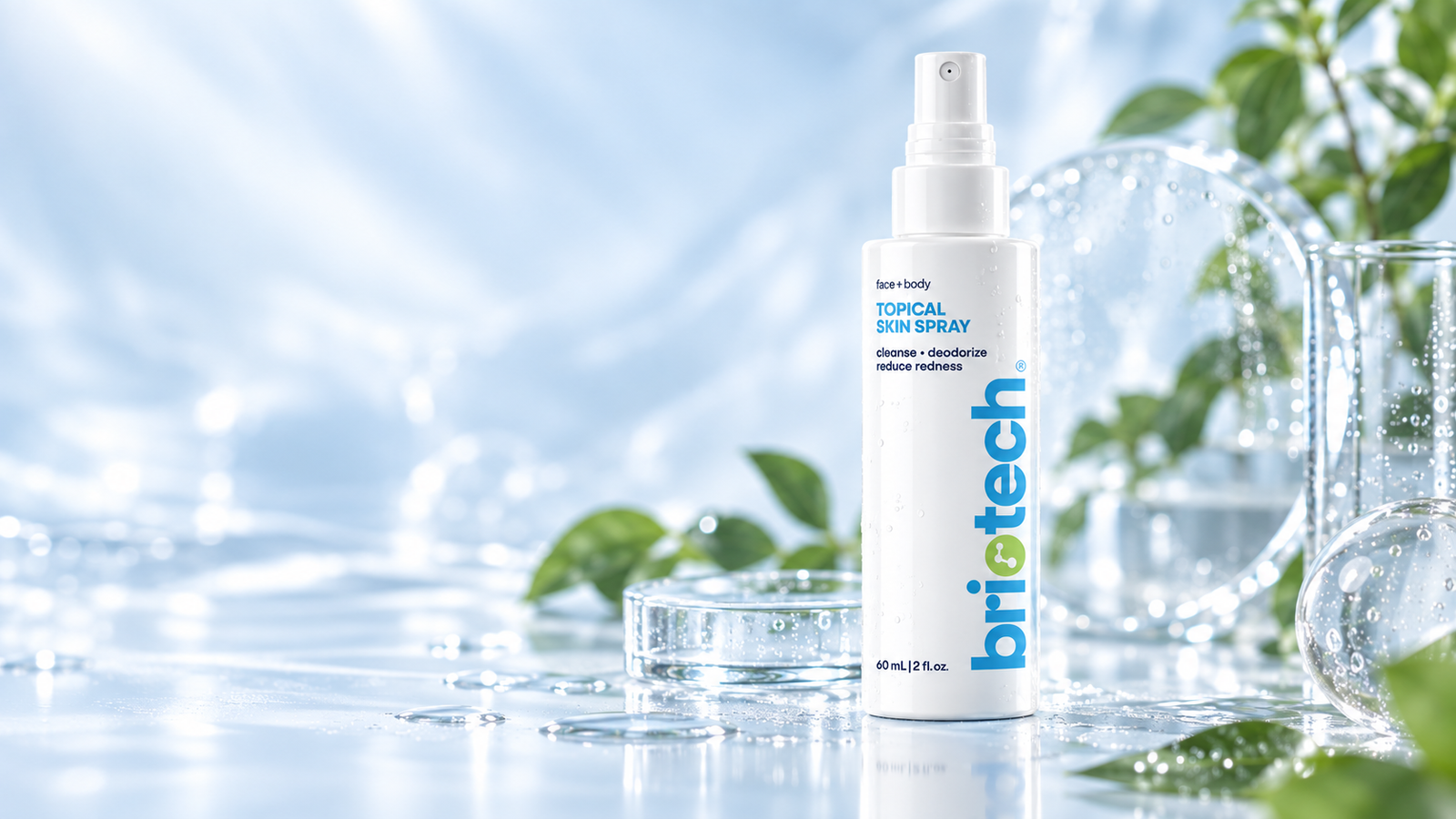
When breakouts come with redness and easily irritated skin, choosing another treatment can be tricky. Hypochlorous acid sprays may offer some soothing support without adding another exfoliant.
They have antimicrobial properties, but the evidence for clearing acne with a facial spray is limited. Whether one is worth trying depends on what you expect it to do.
Affiliate disclosure: This post contains affiliate links. As an Amazon Associate, I earn from qualifying purchases at no extra cost to you.
What Is Hypochlorous Acid?
Hypochlorous acid, or HOCl, is a substance certain white blood cells produce to help defend the body against microbes. Facial sprays contain a manufactured, diluted solution formulated for skin.
Despite the word “acid,” HOCl does not exfoliate like glycolic or salicylic acid. Its role is mainly antimicrobial, with potential anti-inflammatory benefits.
Does Hypochlorous Acid Help Acne?
It may help as an additional step, but acne also involves clogged pores, inflammation and hormonal influences. Reducing microbes alone does not address all of those factors.
A small randomized trial found improvements in inflammatory acne with a specific antiseptic formulation. The findings are encouraging, but they do not tell us how well each HOCl spray on the shelf will work.
HOCl makes the most sense as a supporting step. Benzoyl peroxide and adapalene have stronger clinical support for acne. An HOCl spray should not replace prescribed acne treatment. Seek advice for deep, painful or scarring breakouts.
For acne that leaves dark marks, our azelaic acid guide for beginners explains an ingredient used for both concerns. HOCl is not an established pigmentation treatment.
What About Redness and Irritation?
Some topical HOCl preparations may soothe irritated skin. A small, short study in people with atopic dermatitis found reduced itching, although that does not establish facial sprays as treatments for eczema or rosacea.
What matters most is why your skin is red. If the problem started after a new retinoid, exfoliant or harsh cleanser, pause the irritating product and simplify your routine.
If even a plain moisturizer stings, start with our guide to recognizing and repairing a damaged skin barrier. Persistent flushing, burning or recurring rashes deserve a dermatologist’s assessment.
Is It Useful After a Workout?
You can use a facial HOCl spray after exercise as directed, but it does not wash away sweat, sunscreen or makeup.
Gently cleanse after sweating and avoid scrubbing. If washing leaves your face tight, our best Korean cleansers for dry and sensitive skin can help you find a more comfortable option.
How to Use Hypochlorous Acid in Your Routine
Patch test before using a new spray regularly. For a leave-on formula:
- Cleanse gently and pat dry. Follow the product’s directions if they differ.
- Apply the recommended amount. Avoid spraying directly into your eyes or inhaling the mist.
- Let it air-dry. Apply your other skincare afterward.
- Follow with moisturizer. Finish your morning routine with broad-spectrum SPF 30 or higher.
Follow the label’s frequency guidance and introduce it gradually if your skin is reactive.
Keep your moisturizer in the routine. A simple HOCl mist does not provide the same lasting moisture support as a cream. Our guide to the best moisturizers for a damaged skin barrier can help if dryness is also a concern.
What to Look for in a Spray
Choose a product specifically labeled for facial or skin use. Household disinfectants are not substitutes. For sensitive skin, look for a fragrance-free, alcohol-free formula. Concentration, pH and stability all matter; a higher percentage alone does not mean better results.
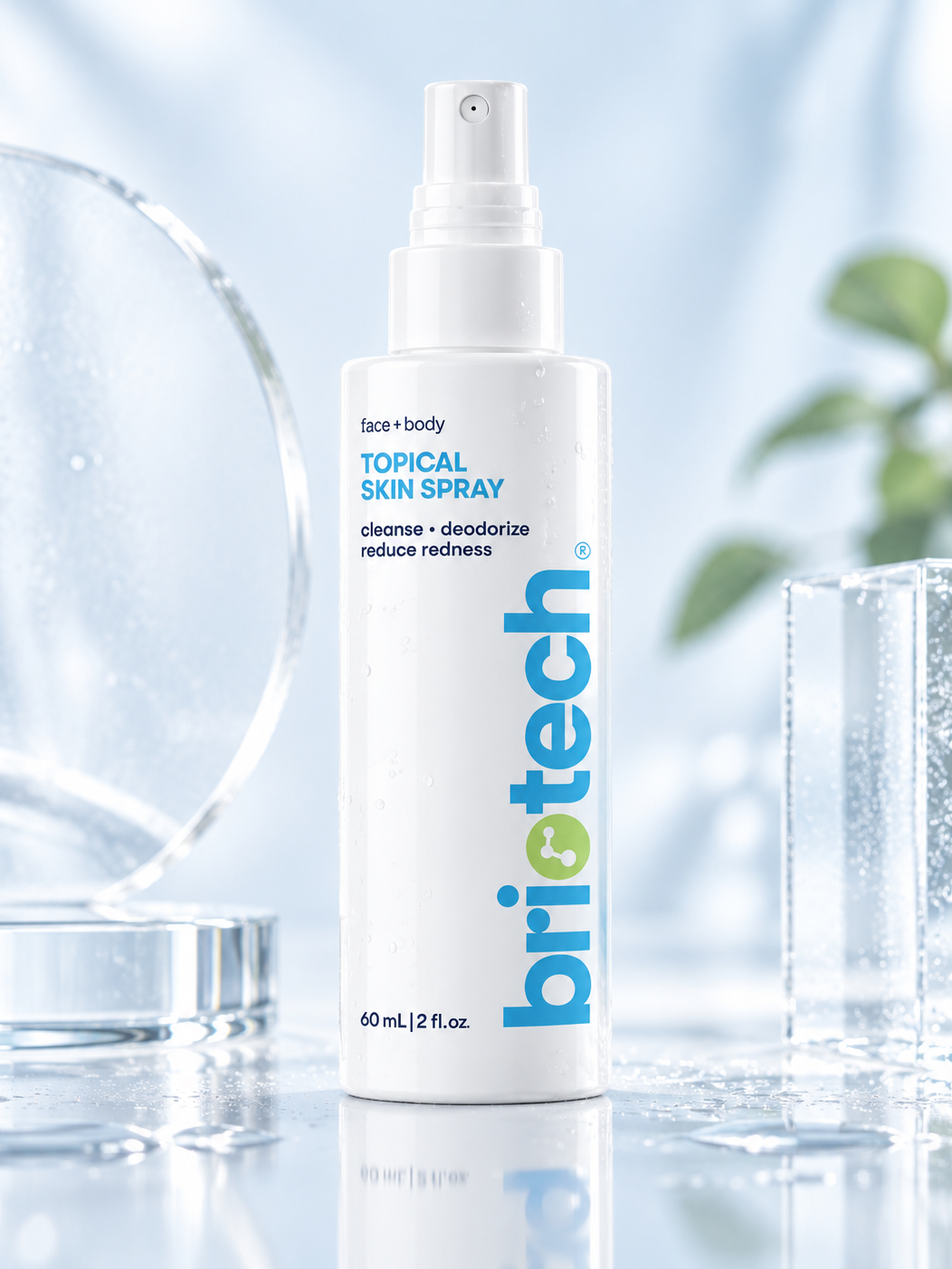
Find it here: BRIOTECH Topical Skin Spray
If you prefer a short ingredient list, BRIOTECH Topical Skin Spray is one option to consider. The manufacturer lists purified water, sodium chloride and 0.014% hypochlorous acid, with no added fragrance or alcohol.
Store it in its original packaging, away from heat and direct sunlight. Follow the expiry and after-opening instructions, and do not dilute the formula.
Common Questions
Can you use it with vitamin C or retinol?
Follow the spray’s layering instructions. HOCl is an oxidizing agent, so avoid mixing it directly into vitamin C serum or other products. Some manufacturers advise letting it dry fully before applying actives.
Using vitamin C in the morning and HOCl in the evening is another option. With retinol, keep to a frequency your skin already tolerates.
Does it cause purging?
Purging is not an expected effect of HOCl itself. If a spray causes more bumps, burning or itching, stop using it. Worsening skin is not a reason to keep applying it.
How quickly should you expect results?
There is no reliable timeline that applies to every spray. Feeling soothed and seeing fewer breakouts are different outcomes. If regular use brings no noticeable benefit, there is no need to keep buying it.