

You cleanse, you moisturize, maybe you even have a whole routine, and your skin still looks flat and tired every morning. You’re not alone, and more importantly, there’s usually a clear reason for it. This guide breaks down exactly what’s causing it and walks you through a simple, effective morning routine that addresses dullness, dehydration, and uneven tone step by step, in the right order.
Why Does Skin Look Dull in the Morning?
Dull skin is rarely one single problem. Most of the time it’s a combination of a few things happening at once and knowing which ones apply to you makes it easier to target them properly.
Dead Skin Cell Buildup
Your skin sheds dead cells naturally, but that process slows with age, stress, and environmental factors. When buildup accumulates faster than it’s cleared, the surface scatters light unevenly instead of reflecting it and skin looks flat and rough even when nothing else is technically wrong.
Dehydration
Dehydrated skin lacks water, not just oil. It looks slightly sunken, feels tight, and loses the plumpness that gives skin its healthy, lit-from-within quality. Dehydration is one of the most common and most overlooked causes of dullness and it responds quickly to the right products.
Poor Circulation
Circulation slows during sleep, which is part of why skin looks dullest first thing in the morning. The subtle warmth and color that come from good blood flow just haven’t kicked in yet. A gentle morning routine and a minute of facial massage can make a visible difference here.
Sun Damage and Uneven Pigmentation
UV exposure over time creates patchy melanin distribution: dark spots, discoloration, and a general unevenness that prevents light from reflecting off the skin smoothly. Even subtle background unevenness flattens a complexion significantly.
Morning Skincare Routine for Dull Skin Step by Step
This routine has five steps. You don’t have to do all five from day one, especially if you’re a beginner or have sensitive skin, but each step has a specific job, and together they address the main causes of dullness in the right order.
Before we get into it: the sequence matters. Applying products in the wrong order prevents them from absorbing properly and reduces how effective they actually are. If you want a full breakdown of layering logic, this [skincare routine order guide] covers exactly how each product type works in relation to the others.
Step 1: Morning Cleanse
Not everyone needs a full cleanse in the morning. If your skin is dry or sensitive and you cleansed well the night before, rinsing with lukewarm water is often enough, it removes what’s accumulated overnight without stripping the moisture your skin worked to build up while you slept.
If your skin produces a lot of oil overnight, or you used a rich overnight treatment, a gentle cleanser makes more sense. Either way, keep it mild. A tight, stripped feeling after cleansing is a sign the formula is too harsh for daily use.
What to look for: A cream or gel formula that rinses clean without leaving skin uncomfortable. For dull or dehydrated skin, something with glycerin or a hydrating base works better than a foaming formula.
Step 2: Hydrating Toner or Essence
This step is optional, but if your skin consistently looks dull and dehydrated, it’s worth adding. A hydrating toner or essence applied right after cleansing while skin is still slightly damp restores water content to the surface and helps the products you apply next absorb more effectively.
Not a fan of toner? You can skip it and rely on your serum and moisturizer for hydration instead. If your skin responds well to a hydrating layer here, it tends to make a visible difference relatively quickly.
What to look for: Hyaluronic acid, glycerin, panthenol, or Centella asiatica. Avoid formulas with alcohol high on the ingredient list or added fragrance.
Step 3: Vitamin C Serum
This is the most important active ingredient for a dull skin morning routine. Vitamin C is an antioxidant, it protects skin from the UV and pollution damage that causes uneven tone over time, and it gradually works on existing pigmentation to even things out and brighten the complexion.
How Often Should You Use Vitamin C?
Every morning, ideally. Vitamin C works best as a daily habit the protective and brightening effects are cumulative, so consistency is what drives results. If you’re just starting out, using it daily from the beginning is fine.
Does Vitamin C Go Before or After Toner?
After toner, before moisturizer. Apply it to clean, dry skin, not damp skin and give it a minute to absorb before layering anything on top.
What If It Stings?
Some tingling is normal, especially with higher-concentration formulas using pure L-ascorbic acid. If it’s more than mild, try a lower concentration (10% is a good starting point) or look for a formula using a gentler vitamin C derivative like ascorbyl glucoside or sodium ascorbyl phosphate these tend to be better tolerated by sensitive skin and still deliver real results.
One practical note: vitamin C oxidizes with exposure to light and heat. If your serum has turned noticeably orange or brown, it’s degraded. Store it in a cool, dark place and replace it when you notice significant color change.
What to look for: L-ascorbic acid at 10–15% for more experienced skin, or a stable vitamin C derivative if your skin is sensitive. Formulas that also contain vitamin E and ferulic acid tend to be more stable and more effective.
Step 4: Moisturizer
Moisturizer is the step that makes everything else in your routine work better. A well-hydrated skin surface reflects light more evenly, holds active ingredients in place, and maintains the barrier that keeps your skin balanced and resilient.
For dull skin, the ingredients that matter most are ceramides (which repair and reinforce the barrier), hyaluronic acid (which draws water into the skin and holds it there), and niacinamide one of the most useful ingredients for dullness overall. Niacinamide supports an even tone, strengthens the barrier, and helps regulate oil production, all in one ingredient.
What to look for by skin type: Lightweight gel or fluid formulas for oily and combination skin; richer creams or lotions for dry and dehydrated skin. Sensitive skin does better with fragrance-free formulas and a short, simple ingredient list.
Step 5: SPF
This is the step that protects everything you’ve just done. Skip it, and the vitamin C, the hydration, the barrier support all of it is being undermined every day by UV exposure that creates new damage faster than your routine can address the old.
Why SPF Matters Specifically for Dull Skin
Uneven pigmentation and surface damage from UV are two of the biggest contributors to dullness. If you’re using vitamin C to brighten your skin but going into the day without SPF, you’re running in place. Daily broad-spectrum protection minimum SPF 30, ideally SPF 50 is the most effective long-term investment you can make for your skin’s appearance.
It applies year-round, on cloudy days, and indoors near windows. UVA rays, the ones most responsible for pigmentation and skin aging, penetrate glass and are present regardless of the weather.
What to look for: A broad-spectrum SPF 50 with a lightweight texture. Look for terms like “invisible finish” or “fluid formula” if you’ve struggled with SPF feeling heavy or leaving a cast. Korean and European formulations tend to be particularly good in terms of everyday wearability.
How Long Does It Take to Improve Dull Skin?
This is one of the most common questions and it’s worth setting realistic expectations before you start, because dull skin doesn’t transform overnight.
Within the first 1-2 weeks, better hydration from toner and moisturizer can make skin look plumper and slightly more awake. This is the fastest win.
By weeks 3-4, if you’re using vitamin C consistently, you may start to notice a more even surface tone and a subtle brightening effect, especially in areas where you have minor discoloration.
At 6-8 weeks and beyond, more significant improvements in overall tone, clarity, and radiance become visible. This is when the cumulative effect of daily vitamin C, consistent SPF, and regular hydration starts to show clearly.
The honest answer is that a morning routine for dull skin is a long game. The results are real, but they come from consistency, not from the first few uses.
Quick Reference: Routine by Skin Type
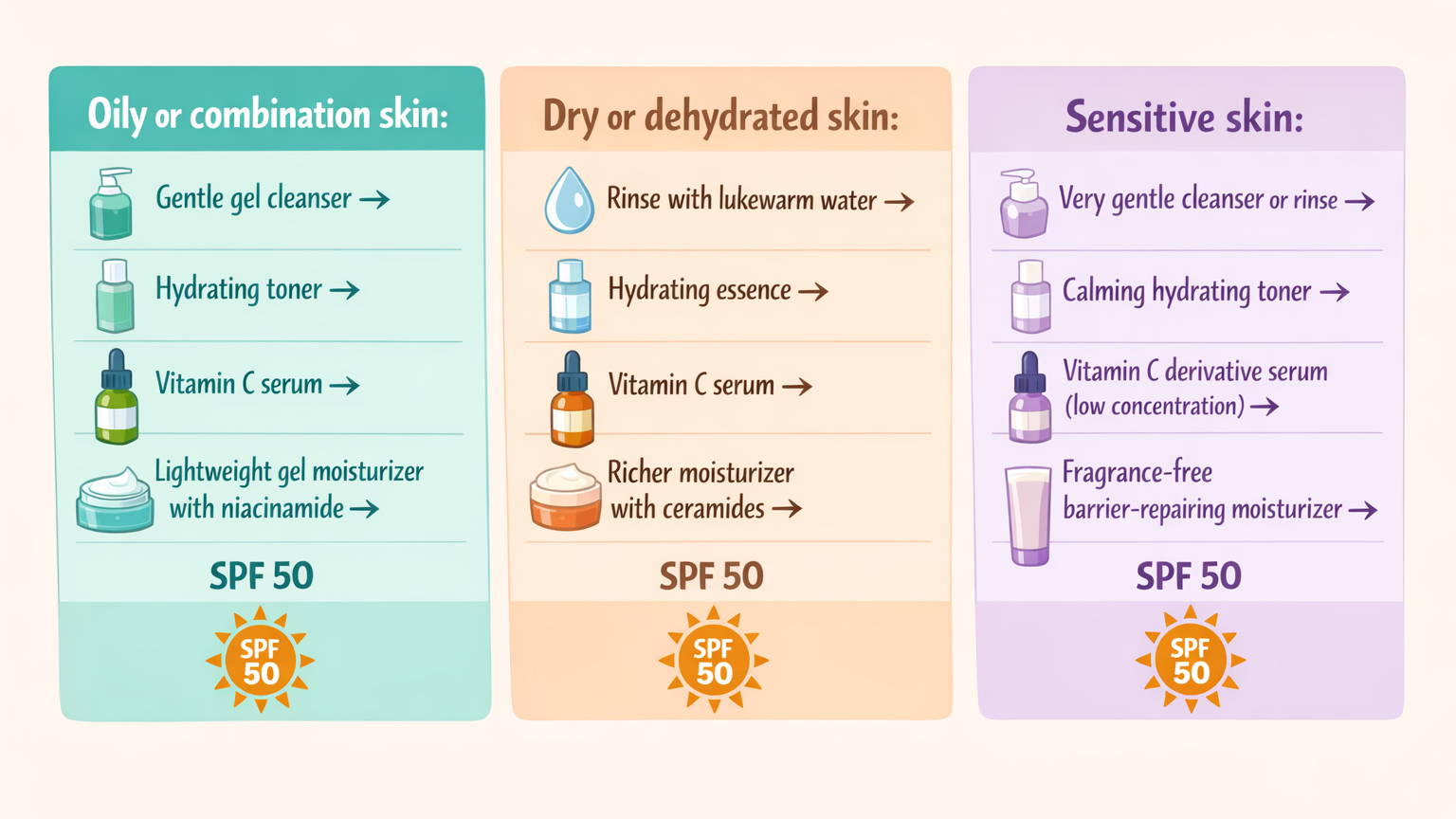
All three follow the same core structure: cleanse, hydrate, treat, protect. The products change; the logic doesn’t.
For a full morning and evening routine built from the ground up, this My Simple AM & PM Skincare Routine for Glowing Skin is the place to start.
Extra Habits That Help with Dullness
Facial massage. Sixty seconds of upward, outward strokes while applying your moisturizer stimulates circulation, reduces overnight fluid retention, and gives skin a warmer, more awake quality. It costs nothing and makes a visible difference, especially in the morning.
Water intake. Skin is the last organ to receive water from the body, so internal dehydration shows up on the face quickly. Topical hydration and internal hydration support each other they’re not interchangeable.
Evening routine. Your morning routine protects and treats. The evening is when skin renewal and repair happen most actively. A strong evening routine supports everything your morning routine is working toward. If your skin is oily or acne-prone, this Night Skincare Routine for Oily and Acne-Prone Skin is a practical guide to building that counterpart.
Dull Skin Mistakes That Make Things Worse
Using too many brightening products at once. Vitamin C in the morning, exfoliating acids at night, and a brightening mask twice a week can all be good choices individually. Stacked too quickly, they overload the barrier and create reactivity instead of radiance. Start with one or two treatments and build from there.
Over-exfoliating. If your skin looks persistently dull and doesn’t respond to treatment, over-exfoliation may be the actual problem. A damaged barrier can’t reflect light well, and adding more acids makes it worse. Pause exfoliation and focus on hydration and barrier repair first.
Skipping moisturizer on oily skin. Oily skin can be dehydrated, the two aren’t mutually exclusive. Skipping moisturizer doesn’t reduce dullness; it usually makes it worse, because a dehydrated surface scatters light rather than reflecting it.
Switching products too quickly. Vitamin C and other brightening ingredients need consistent daily use for several weeks before you’ll see a real difference. Changing products before they’ve had time to work means you never get an accurate picture of what’s actually helping.
Glow Comes from Consistency, Not Complexity
A good morning routine for dull skin doesn’t need to be complicated, it needs to be consistent. Hydration protects the surface and gives skin its reflective quality. Vitamin C works on existing pigmentation and prevents new damage. SPF ensures all of that progress isn’t being undone every day.
Do those three things reliably, in the right order, and give them enough time to work. That’s what actually builds a lasting glow, not the most expensive serum or the most elaborate routine, but a simple foundation you can stick with.
Start there. Everything else comes after.