
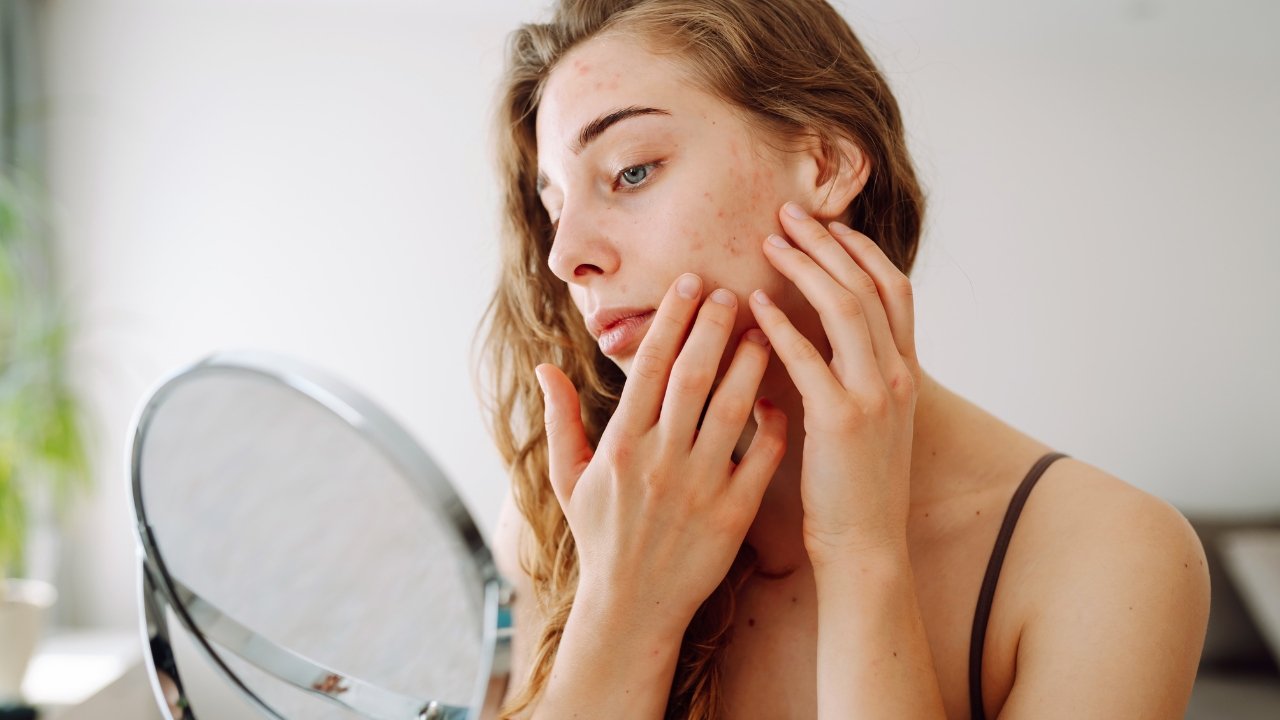
Cheek and jaw breakouts are their own specific kind of frustrating. They’re not the occasional spot that appears before a big event and disappears quietly a few days later. They’re the persistent kind, the ones that clear up in one spot and reappear somewhere nearby, that never fully go away, and that don’t seem to respond to the same things that work for breakouts elsewhere on the face.
If that sounds familiar, the reason is usually this: breakouts on the cheeks and jaw often have different causes than breakouts on the forehead or nose, and treating them the same way tends not to work. This guide breaks down the most common reasons this area keeps breaking out, how to tell which one applies to you, and what to actually do about it.
Affiliate disclosure: This post contains affiliate links. As an Amazon Associate, I earn from qualifying purchases at no extra cost to you.
Why the Cheeks and Jaw Are Different
The lower face cheeks, jaw, and chin is more hormonally reactive than the upper face. It has a higher density of androgen receptors, which means it responds more directly to hormonal fluctuations. That’s why breakouts in this area often follow a pattern, appearing at predictable times in the month, worsening under stress, or showing up consistently rather than randomly.
But hormones aren’t the only cause. The cheeks and jaw are also the area’s most in contact with external surfaces: phones, pillowcases, hands and they’re often the last place people think to examine when a routine isn’t working. Understanding which factor is driving the breakouts is what makes the difference between a fix that works and a fix that doesn’t.
The Most Common Reasons You’re Breaking Out on Your Cheeks and Jaw
Hormonal Fluctuations
This is the most common driver of persistent jaw and cheek breakouts, especially in women. Hormonal acne in this area typically follows a monthly pattern flaring in the week before a period and settling afterward.
Stress makes this worse. Cortisol the stress hormone amplifies the same hormonal signals that trigger breakouts in the lower face, which is why a particularly stressful period often shows up on the jaw before it shows up anywhere else.
If your breakouts are cyclical, deeper under the skin, and located along the jawline and lower cheeks, hormonal activity is almost certainly involved. Topical skincare can help manage the surface keeping pores clear, reducing inflammation, supporting the barrier, but it can’t fully override a hormonal cycle. If the pattern is significant and consistent, it’s worth speaking with a dermatologist or GP about options beyond topical skincare.
Your Phone Screen
This one is easy to overlook and genuinely makes a difference. Phone screens accumulate oil, bacteria, and product residue every time you hold the phone against your face and then transfer all of that directly to your cheek and jaw every time you take a call. If your breakouts are worse on one side of your face, this is often why.
Pillowcases
Changing pillowcases more frequently, every two to three days rather than weekly is one of the most consistently effective environmental changes for cheek and jaw breakouts. Silk or satin pillowcases are gentler on the skin and don’t absorb product the same way cotton does, which makes them worth considering if frequent changing feels impractical.
Hair Products
If your hair falls across your cheeks and jaw, the products in it, dry shampoo, oils, styling creams, hairspray are in regular contact with that skin. Many hair products contain ingredients that are comedogenic for facial skin even if they’re designed for hair. This is a particularly common and underdiagnosed cause of cheek breakouts, especially in people who use leave-in treatments or oils.
A Product in Your Routine That Doesn’t Agree with Your Skin
Not every breakout from a skincare or makeup product looks like an allergic reaction. Sometimes a product that seems fine, no stinging, no redness is still comedogenic for your skin specifically, and the result is slow, persistent congestion that builds over weeks rather than an obvious immediate reaction.
Over-Cleansing or a Barrier That’s Been Disrupted
If your routine involves cleansing more than twice a day, daily exfoliation, or multiple active ingredients used together, the barrier may be part of the problem. Simplifying the routine and focusing on barrier repair often clears congestion that wasn’t responding to more aggressive treatment. This guide covers exactly what a damaged barrier looks like and how to address it: How to Know If Your Skin Barrier Is Damaged and How to Fix It.
How to Tell What’s Actually Causing Your Breakouts
Because cheek and jaw breakouts have several possible causes, narrowing down the most likely one for your specific situation matters more than applying a generic fix.
Ask yourself these 5 questions:
- Do the breakouts follow a monthly pattern, worsening at predictable times?
- Hormonal activity is likely involved.
- Are they worse on one side of your face?
- Phone contact or sleeping position is worth examining.
- Did they start or worsen when you introduced a new product?
- That product is worth eliminating temporarily.
- Are they accompanied by skin that feels tight, reactive, or sensitive to products it used to tolerate?
- Barrier disruption may be a factor.
- Do they tend to be surface-level congestion rather than deeper cysts?
- Environmental and product-related causes are more likely.
What Actually Helps: Ingredients and Products Worth Using
Regardless of the cause, a few ingredients consistently make a difference for cheek and jaw breakouts.
Salicylic acid is the most targeted option for surface congestion, it’s oil-soluble, so it gets into the pore rather than just sitting on top. Two to three times a week in the evening is enough. Don’t use it on already-compromised skin, and don’t layer it with retinol on the same night. How it fits into the full routine is covered here: Skincare Routine Order: How to Layer Your Products the Right Way.
If you are new to BHA, my Salicylic acid for beginners guide explains how to introduce it slowly without overdrying your skin.
Niacinamide doesn’t treat active breakouts directly, but it reduces inflammation, regulates oil, and strengthens the barrier which creates the kind of skin environment where breakouts are less likely to form. Daily use, morning or evening, no adjustment period needed. Full guide here: Niacinamide: What It Does for Your Skin and How to Use It the Right Way.
A gentle, non-stripping cleanser is the foundation everything else depends on. Stripping the skin triggers more oil production and weakens the barrier, both of which make breakouts worse. The cleanser I reach for on acne-prone skin is
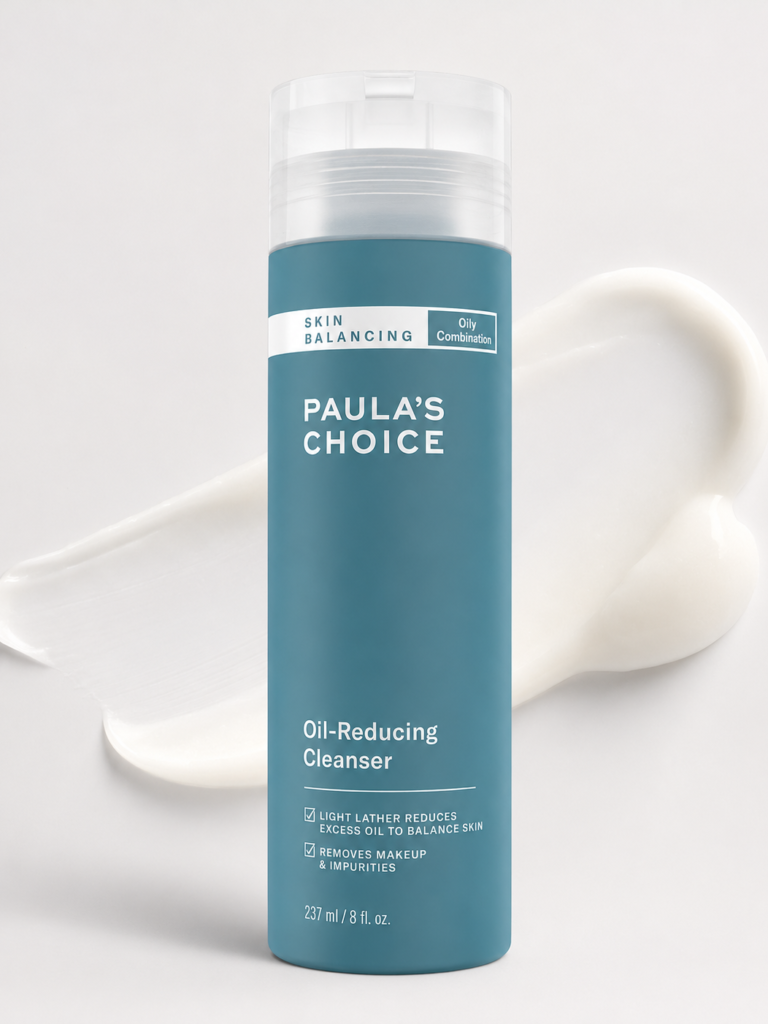
Paula’s Choice Skin Balancing Oil-Reducing Cleanser effective without being harsh.
If your skin breaks out easily, my guide to the best cleansers for oily and acne-prone skin can help you compare gentle options that cleanse well without stripping your barrier.
A lightweight, non-comedogenic moisturizer. Acne-prone skin needs hydration a dehydrated barrier is more vulnerable to bacteria, not less. Gel or fluid textures with glycerin, hyaluronic acid, or niacinamide work well without adding congestion.
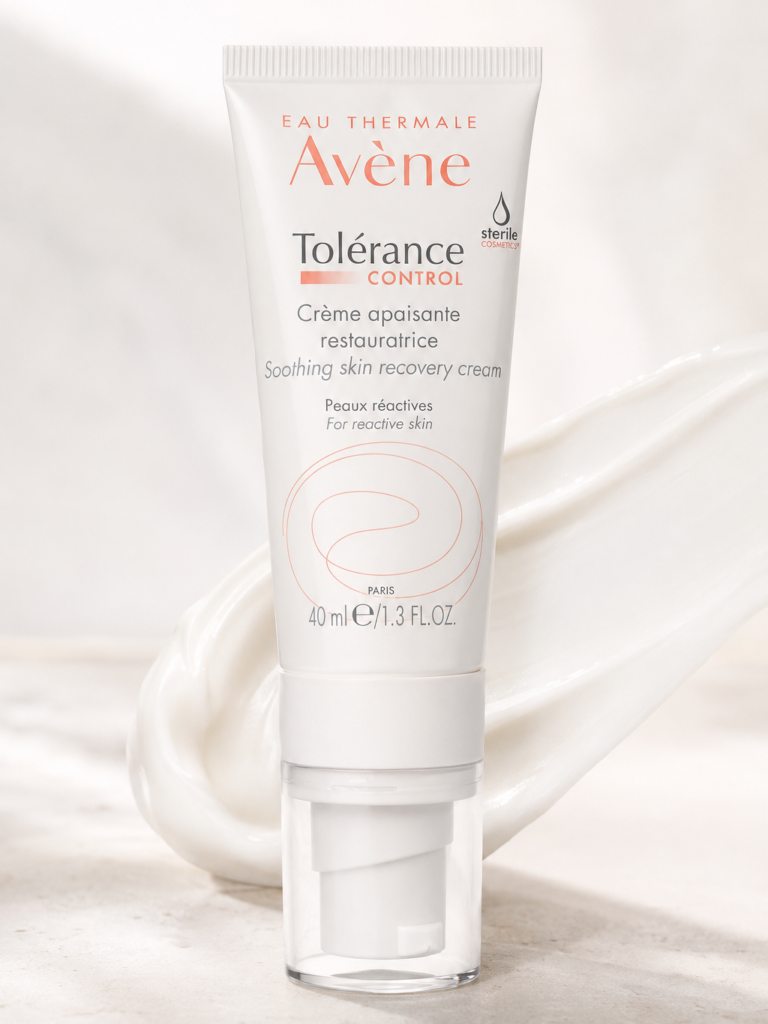
Avène Tolerance Control Soothing Skin Recovery Cream is what I use when my skin is reactive, hydrating, no heaviness, never breaks me out.
An SPF that doesn’t clog pores. Skipping sunscreen because it feels heavy is one of the most common and costly mistakes for acne-prone skin UV exposure slows healing and worsens pigmentation. Gel or fluid formulas sit much better than cream sunscreens on this skin type.
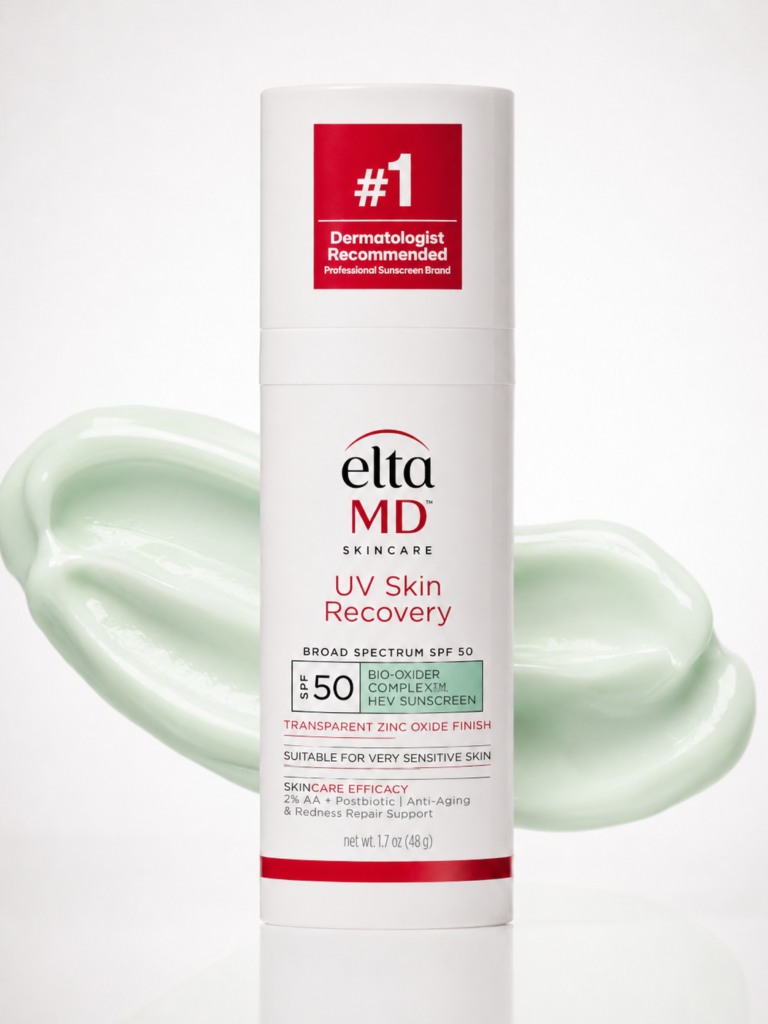
EltaMD UV Skin Recovery Face Sunscreen is the one I keep coming back to lightweight, no white cast, no congestion.
If sunscreen usually feels heavy or pore-clogging on you, my guide to the best sunscreens for oily and acne-prone skin is a better place to start.
The Evening Routine for Cheek and Jaw Breakouts
The structure is simple: double cleanse, one treatment two to three times a week (salicylic acid or retinol on alternating nights, never together), niacinamide, lightweight moisturizer. On non-treatment nights, just cleanse, niacinamide, moisturize.
For the full step-by-step breakdown with product order and timing, this guide covers everything: Night Skincare Routine for Oily and Acne-Prone Skin.
When to See a Dermatologist
Topical skincare can do a lot for mild to moderate breakouts on the cheeks and jaw, but it has limits. If your breakouts are predominantly deep, cystic, and painful rather than surface-level congestion, topical treatment alone is unlikely to be sufficient. Deep cystic acne typically requires prescription intervention whether that’s topical retinoids, antibiotics, or hormonal treatment that goes beyond what over-the-counter skincare can address.
If you’ve been consistent with a gentle, targeted routine for three months and the breakouts aren’t improving meaningfully, that’s a clear sign to bring in a dermatologist. There’s no benefit to continuing to manage something that needs more targeted treatment.
Consistency and Cause Matter More Than Products
Cheek and jaw breakouts are rarely solved by finding the perfect spot treatment or adding another active ingredient to the routine. They’re usually solved by identifying what’s actually causing them, whether that’s hormonal, environmental, or product-related and addressing that consistently over time.
A gentle cleanser, a non-comedogenic moisturizer, daily SPF, and a targeted treatment used two or three nights a week is more effective for most people than a complicated ten-step routine. Pair that with a clean pillowcase, a clean phone screen, and a routine that’s simple enough to stick to and most cheek and jaw breakouts will start to respond.
It takes patience. But the right approach, applied consistently, almost always gets there.