
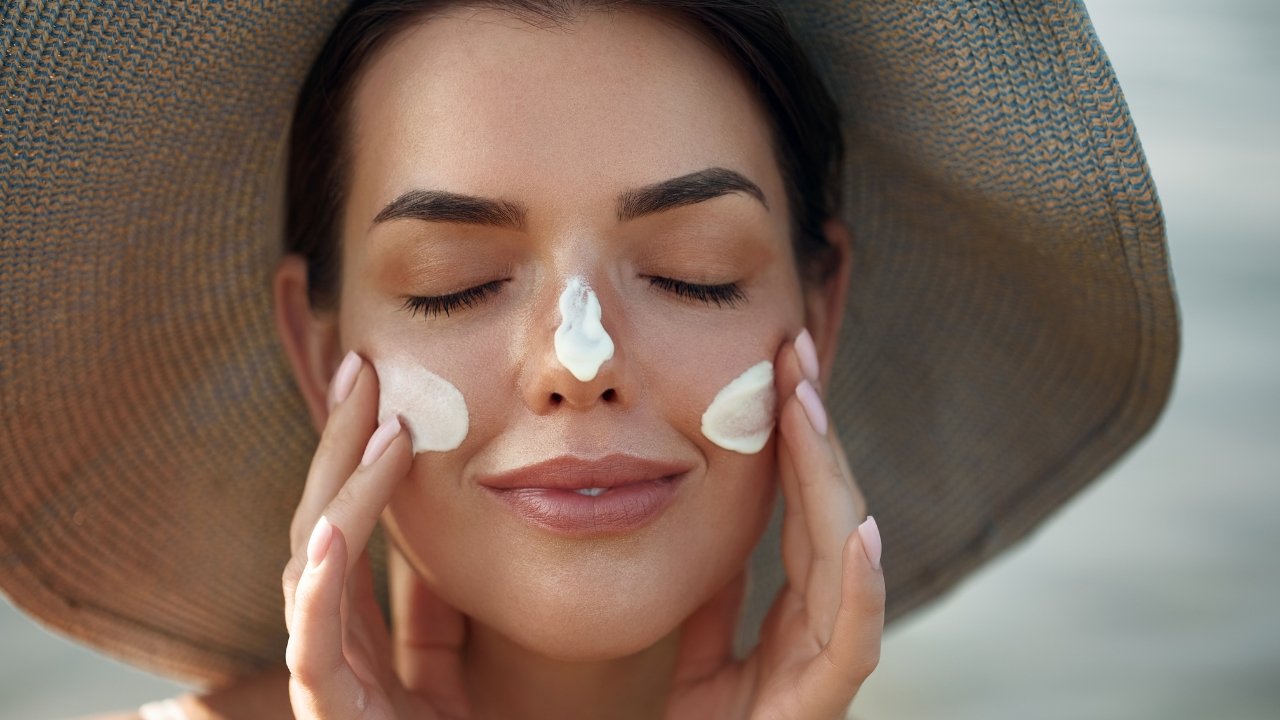
If there’s one step in a skincare routine that delivers more long-term results than anything else more than retinol, more than vitamin C, more than any serum you’ll ever buy its sunscreen. Not because it fixes what’s already there, but because it stops the damage from happening in the first place.
Most people know SPF is important. Far fewer actually wear it every day, all year round, in the right amount. This guide covers everything you need to know to get it right why SPF matters, how to choose one you’ll actually use, and how it fits into your routine.
Affiliate disclosure: This post contains affiliate links. As an Amazon Associate, I earn from qualifying purchases at no extra cost to you.
Why SPF Is the Most Important Step in Your Routine
UV exposure is responsible for roughly 80% of visible skin aging. The dark spots, uneven tone, loss of firmness, and fine lines that most people spend money trying to fix are largely caused and accelerated by cumulative sun damage over years.
There are two types of UV rays to understand:
UVB rays cause sunburn. They’re strongest in summer, in direct sunlight, and at higher altitudes. SPF numbers on product labels specifically measure protection against UVB.
UVA rays cause skin aging and pigmentation damage. They penetrate deeper into the skin, are present year-round at consistent levels, and critically they penetrate glass. You’re being exposed to UVA rays sitting by a window indoors, driving, and on cloudy days when you’d never think to apply sunscreen.
This is why broad-spectrum protection matters. A sunscreen that only blocks UVB is protecting you from burning but not from the UV that drives most of the damage you’re trying to prevent.
Mineral vs. Chemical Sunscreen – What’s the Difference?
This is the question most people have when they start looking at SPF, and it’s worth understanding clearly because it affects how each formula works on your skin.
Mineral Sunscreen
Mineral sunscreens use zinc oxide, titanium dioxide, or both as their active ingredients. They sit on top of the skin and physically scatter and reflect UV rays before they penetrate.
Advantages: Effective immediately upon application, well-tolerated by sensitive and reactive skin, no absorption concerns, reef-safe.
Disadvantages: Can leave a white cast, especially on deeper skin tones. Older formulas could feel heavy, though modern mineral sunscreens have improved significantly.
Chemical Sunscreen
Chemical sunscreens use organic UV filters avobenzone, octinoxate, octisalate, and others that absorb into the skin and convert UV rays into heat, which is then released. They need to be applied 15-20 minutes before sun exposure to be fully effective.
Advantages: Lightweight, invisible finish, easier to formulate without white cast, often more cosmetically elegant.
Disadvantages: Can cause stinging or irritation on sensitive or reactive skin. Some filters are less stable and degrade with UV exposure. Concerns about certain chemical filters absorbing into the bloodstream are still being studied, though regulatory agencies currently consider them safe as used.
Hybrid Sunscreens
Many modern formulas combine both mineral and chemical filters. This allows formulators to get the stability and cosmetic elegance of chemical filters alongside the broad-spectrum coverage of zinc oxide at a lower concentration often with less white cast than a purely mineral formula.
Which is better for you? For sensitive, reactive, or barrier-compromised skin, mineral or hybrid formulas with a high zinc oxide percentage are the safer starting point. For most other skin types, it comes down to texture preference and what you’ll actually wear consistently.
How to Read an SPF Label
SPF Number
SPF measures protection against UVB rays specifically. SPF 30 blocks approximately 97% of UVB rays. SPF 50 blocks approximately 98%. SPF 100 blocks approximately 99%.
The difference between SPF 30 and SPF 50 is real but not dramatic what matters more is that you’re applying enough and reapplying when needed. For daily use, SPF 30 is the minimum. SPF 50 is a better habit, especially if you spend any significant time outdoors.
Broad Spectrum
This label means the formula protects against both UVA and UVB. It’s non-negotiable. A sunscreen without broad-spectrum protection is incomplete regardless of its SPF number.
PA Rating
You’ll see this on Asian sunscreens PA+, PA++, PA+++ or PA++++. This measures UVA protection specifically. More plus signs mean more UVA protection. European formulas use a different UVA symbol (a circle around “UVA”). Both indicate meaningful UVA coverage beyond what the SPF number tells you.
How to Choose an SPF You’ll Actually Use
The best sunscreen is the one you wear every day, not the one with the most impressive ingredients if you hate the texture and skip it three days out of five.
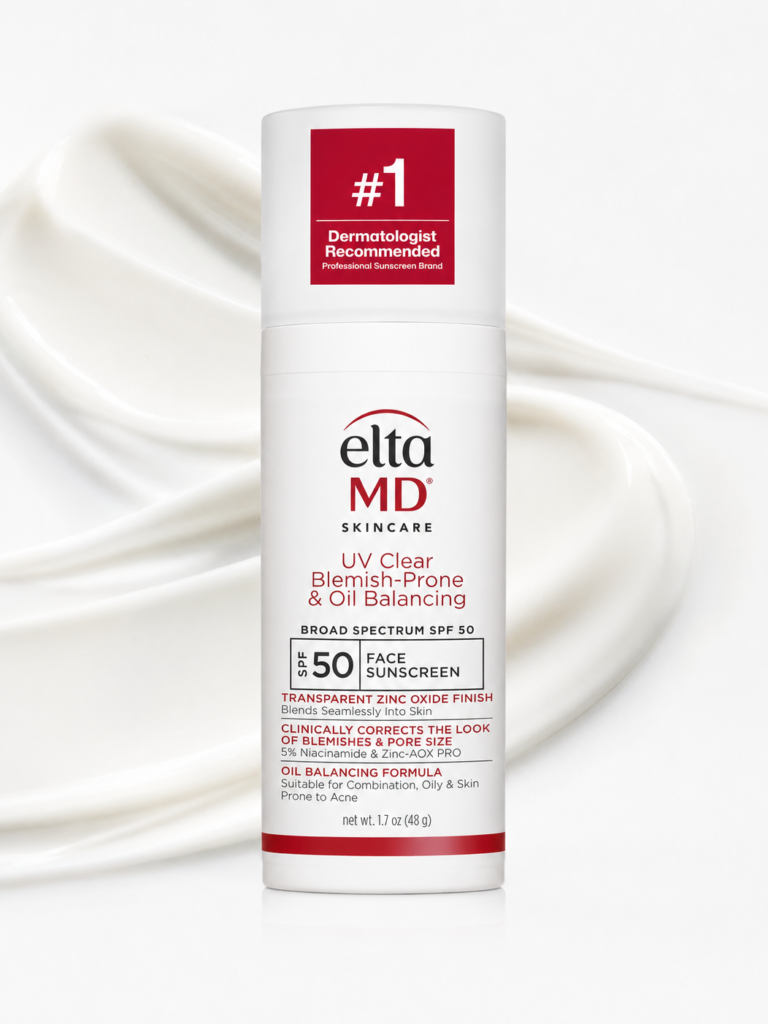
The SPF I use every morning is EltaMD UV Clear Face Sunscreen. It’s lightweight, doesn’t leave a white cast, and layers well under everything without pilling or disrupting my routine
If you prefer a lightweight sunscreen that feels almost invisible on the skin, this one is a really popular option
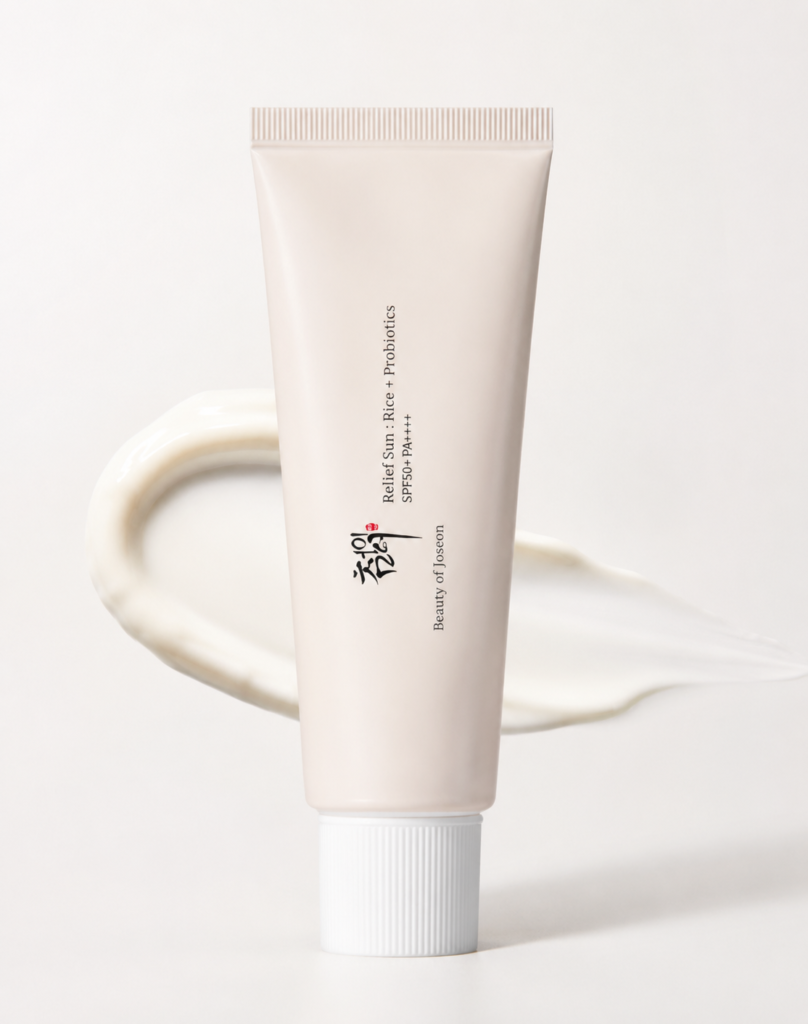
Beauty of Joseon Relief Sun SPF 50, especially if you don’t like the heavier feel of traditional sunscreens.
If you like that softer Korean sunscreen texture, I also rounded up the best Korean sunscreens for dry and sensitive skin with formulas that feel comfortable enough for daily use.
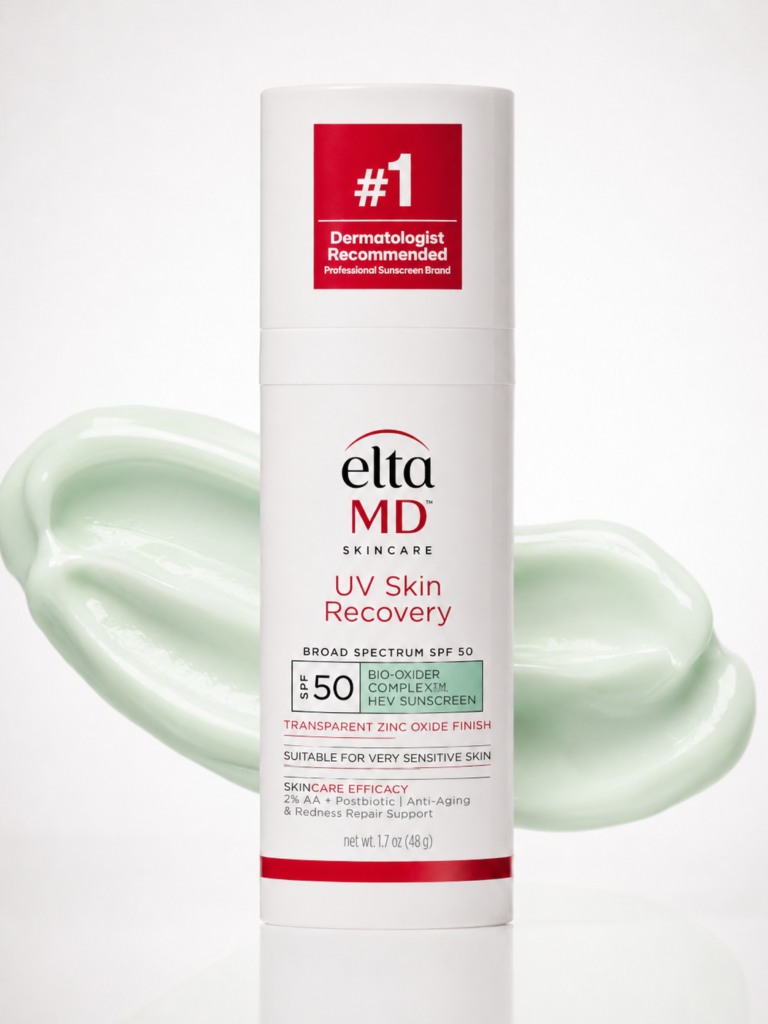
For sensitive skin specifically, the formula I reach for EltaMD UV Skin Recovery Face Sunscreen, 100% zinc oxide, fragrance-free, and it’s never caused stinging even on reactive days.
For oily or acne-prone skin, I also have a separate guide with sunscreen options that feel lighter and less greasy: Best SPF for oily and acne-prone skin in 2026.
How Much Sunscreen to Apply and When to Reapply
This is where most people fall short. Applying too little sunscreen is one of the most common reasons people feel like their SPF “isn’t working.”
For the face: A quarter teaspoon about the size of your fingertip from the first knuckle is the standard recommendation for face and neck combined. Most people apply a fraction of that.
Timing: Chemical sunscreens need 15-20 minutes before sun exposure to be effective. Mineral sunscreens work immediately. Either way, sunscreen goes on as the last step before you head outside.
Reapplication: Every two hours in direct sun exposure, or after swimming or sweating. For everyday indoor use where you’re not in direct sun, morning application is sufficient for most people, but if you’re sitting by a sunny window all day, reapplication matters.
Where Does SPF Go in Your Routine?
Sunscreen is always the last step in your morning routine, after moisturizer, after serums, after everything else.
The reason SPF goes last is that anything applied on top of it can disrupt the film it forms on the skin, reducing its effectiveness. This includes foundation and makeup apply them after SPF, not before.
For a full breakdown of how every morning product layers correctly, Skincare Routine Order: How to Layer Your Products the Right Way explains exactly why sequence matters.
SPF and Active Ingredients – What You Need to Know
Vitamin C + SPF
These two work better together than either does alone. Vitamin C is an antioxidant that neutralizes free radical damage from UV exposure when paired with SPF, the combined protection is greater than SPF alone. Apply vitamin C before moisturizer, then finish with SPF. More on: How to use Vitamin C serum without irritating your skin.
Retinol and SPF
Retinol increases cell turnover, which means the fresh skin underneath is more vulnerable to UV damage. If you’re using retinol even only at night daily SPF the next morning is essential, not optional. Skipping it while using retinol actively works against the results you’re trying to achieve. The full retinol guide is here: Retinol for Beginners: How to Start Without Irritation.
AHA and BHA Exfoliants
Exfoliating acids remove the surface layer of skin, leaving it temporarily more photosensitive. SPF after any exfoliant use even acids used only at night is non-negotiable for the same reason as retinol. Without it, you’re exfoliating away protection faster than you’re building results.
SPF for Different Skin Types
Oily and Acne-Prone Skin
The biggest SPF barrier for oily skin is texture heavy, creamy formulas feel suffocating and can contribute to congestion. Fluid or gel-textured sunscreens, oil-free formulas, and those labeled “matte finish” or “non-comedogenic” tend to work best. Korean and European sunscreen formulations are particularly strong in this category lightweight textures that don’t pill under makeup and don’t exacerbate shine.
If greasy or heavy sunscreen is the reason you skip SPF, my guide to the best sunscreens for oily and acne-prone skin can help you find lighter formulas that are easier to wear every day.
Dry Skin
Dry skin does well with SPF formulas that include hydrating ingredients: hyaluronic acid, glycerin, or squalane alongside the UV filters. Moisturizing SPF formulas that can function as the final moisturizing step in the morning simplify the routine without sacrificing protection.
Sensitive Skin
For sensitive or reactive skin, mineral formulas are the safer starting point. Chemical filters particularly octinoxate and oxybenzone are common causes of stinging and irritation on compromised skin. A 100% mineral SPF with zinc oxide, fragrance-free, in a lightweight formula covers both the protection and the tolerance requirements. More on: How to Build a Simple Skincare Routine for Sensitive Skin.
Darker Skin Tones
White cast is a real concern with mineral sunscreens for deeper skin tones. Tinted mineral formulas, hybrid sunscreens, or chemical formulas with a strong UVA rating are often better options. The UVA concern is just as relevant hyperpigmentation and sun-related dark spots are especially visible on deeper skin tones, making broad-spectrum protection even more important.
Common SPF Mistakes
Not applying enough. A thin layer is not enough. A quarter teaspoon for face and neck is the minimum for full protection.
Skipping it on cloudy days or indoors. UVA rays don’t care about cloud cover or glass. If it’s daytime, SPF applies.
Relying on SPF in foundation or powder. The concentration in makeup is almost never enough, and you’d need to apply far more than anyone actually does for it to count. A dedicated SPF underneath is the only reliable option.
Stopping at the face. The neck, décolleté, and backs of hands age the same way the face does and are exposed just as consistently. Extend SPF downward as a habit.
Using last year’s sunscreen. SPF has an expiration date and degrades over time, especially if stored in a warm or sunny environment. A bathroom shelf in direct sun is one of the worst places to keep it.
Keep This in Mind
Sunscreen is the most evidence-backed step in skincare. Not the most exciting, not the most talked about, but the one with the clearest, most consistent evidence behind it for preventing the visible signs of aging and protecting skin health over time.
Every other step in your routine the vitamin C, the retinol, the barrier-repairing moisturizer is doing its best work. SPF is what makes sure UV doesn’t undo that work every single day.
Apply it every morning, apply enough of it, and treat it as the non-negotiable that it is. For the complete morning routine that this step completes, My Simple AM & PM Skincare Routine for Glowing Skin covers everything from the first cleanse to the final SPF layer.