

Combination skin can feel like your face is giving you two completely different problems at once. Your T-zone gets shiny, your cheeks can feel normal or dry, your pores may look more visible around the nose, and the products that help one area often make another area worse.
That is why combination skin is so easy to treat the wrong way. If you use only products made for oily skin, the drier areas can start feeling tight and irritated. If you use only rich products made for dry skin, your T-zone may feel greasy or congested. The goal is not to force your whole face into one category. The goal is to balance both sides of it.
A good combination skin routine should cleanse without stripping, hydrate without heaviness, treat oiliness and clogged pores only where needed, and protect the skin barrier everywhere.
Affiliate disclosure: This post contains affiliate links. As an Amazon Associate, I earn from qualifying purchases at no extra cost to you.
What Combination Skin Actually Means
Combination skin usually means your T-zone: forehead, nose, and chin – produces more oil than the rest of your face. The cheeks may feel normal, dry, or even slightly sensitive, while the center of the face gets shiny or congested.
It can also change with the season. In summer, your whole face may feel oilier. In winter, your cheeks may feel dry while your nose still gets shiny. This is why combination skin needs a flexible routine, not a harsh one.
One thing worth knowing: combination skin can also be dehydrated. Dehydrated skin lacks water, not oil, so your face can look shiny but still feel tight after cleansing. If that sounds familiar, your routine probably needs more lightweight hydration, not stronger oil-control products.
Step 1: Cleanser
The cleanser is where combination skin routines often go wrong. Many people choose a strong foaming cleanser because the T-zone feels oily, but then the cheeks end up tight or irritated.
For combination skin, you want a gentle gel, cream-gel, or balanced foaming cleanser that removes oil, sunscreen, and daily buildup without leaving your face squeaky clean. That tight feeling after cleansing is not a sign that your cleanser worked well. It usually means it stripped too much.
What to look for: gentle gel or foaming textures, glycerin, aloe, hyaluronic acid, niacinamide, or mild surfactants. Fragrance-free is usually better if your skin is also sensitive or breakout-prone.
In the morning, you may not need a full cleanse every day. If your cheeks feel dry but your T-zone is only slightly oily, a lukewarm water rinse can be enough. At night, cleanse properly, especially if you wore SPF or makeup.
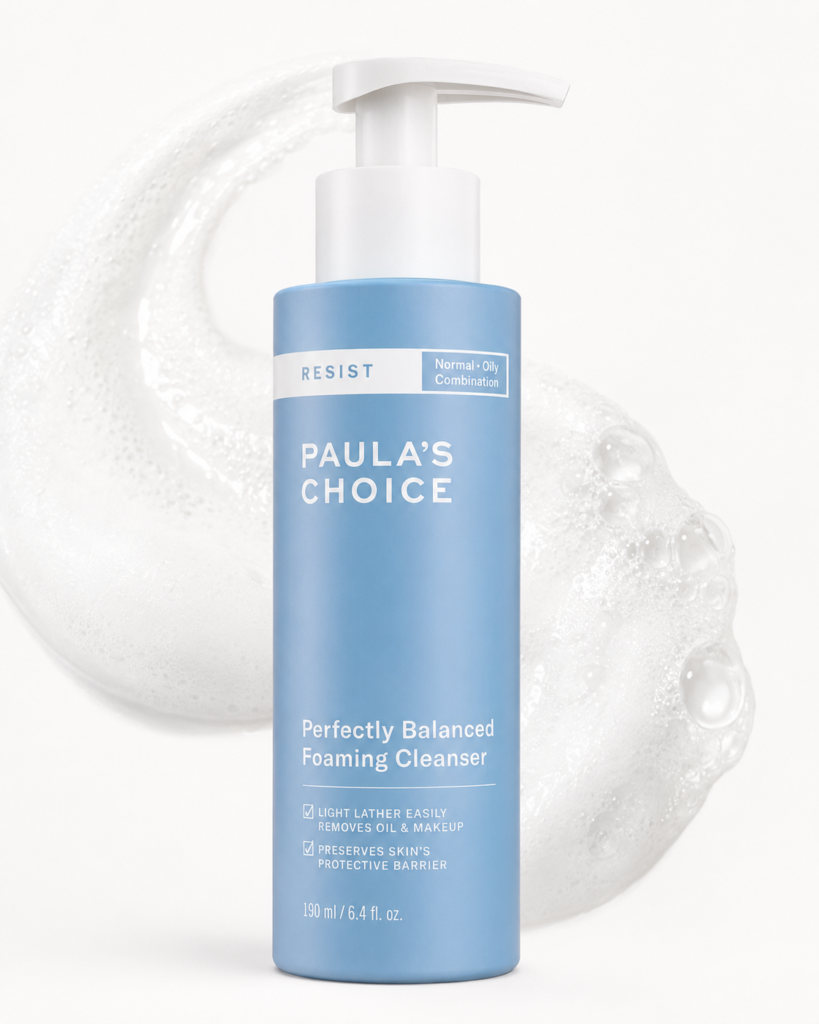
Product pick: Paula’s Choice RESIST Perfectly Balanced Foaming Facial Cleanser.
This is a good everyday cleanser for combination skin because it gives a fresh cleanse without that tight, stripped feeling. It makes sense if your T-zone gets oily, but your cheeks still need something balanced and comfortable.
If your T-zone gets oily or congested easily, my guide to the best cleansers for oily and acne-prone skin can help you find gentle options that cleanse well without leaving the rest of your face tight.
Step 2: Hydrating Toner or Essence
A hydrating toner or essence is optional, but it can be very useful for combination skin. It gives the drier areas light hydration without making the oily areas feel heavy.
This step is especially helpful if your skin feels tight after cleansing or if your moisturizer seems to sit on top instead of sinking in. Apply it with your hands and pat it into slightly damp skin.
What to look for: glycerin, hyaluronic acid, panthenol, beta-glucan, green tea, Centella, or niacinamide.
Avoid alcohol-heavy toners and astringent formulas that promise to “shrink pores.” They may make the skin feel matte at first, but they often leave combination skin more unbalanced over time.
Step 3: Treatment Serum
Combination skin does best with targeted treatment, not every active layered at once.
If your T-zone gets oily, your pores look more noticeable, or your skin feels uneven, niacinamide is one of the easiest ingredients to start with. It can help with the look of excess shine, visible pores, uneven texture, and barrier support without being too harsh for the drier areas.
If clogged pores and blackheads are your main issue, salicylic acid can be useful, but you do not need to apply it all over your face. Use it mostly on the T-zone or only where you actually get congestion.
If dullness or post-acne marks are your main concern, vitamin C can work well in the morning. If texture or early signs of aging are your priority, retinol can be useful at night, but it should be introduced slowly.
The most important rule is this: choose one main concern at a time.
Simple options:
Niacinamide: for oiliness, visible pores, and barrier support.
Hyaluronic acid: if your skin feels tight or dehydrated.
Salicylic acid: only where you get clogged pores.
Vitamin C: in the morning for dullness or uneven tone.
Retinol: at night for texture or early signs of aging.
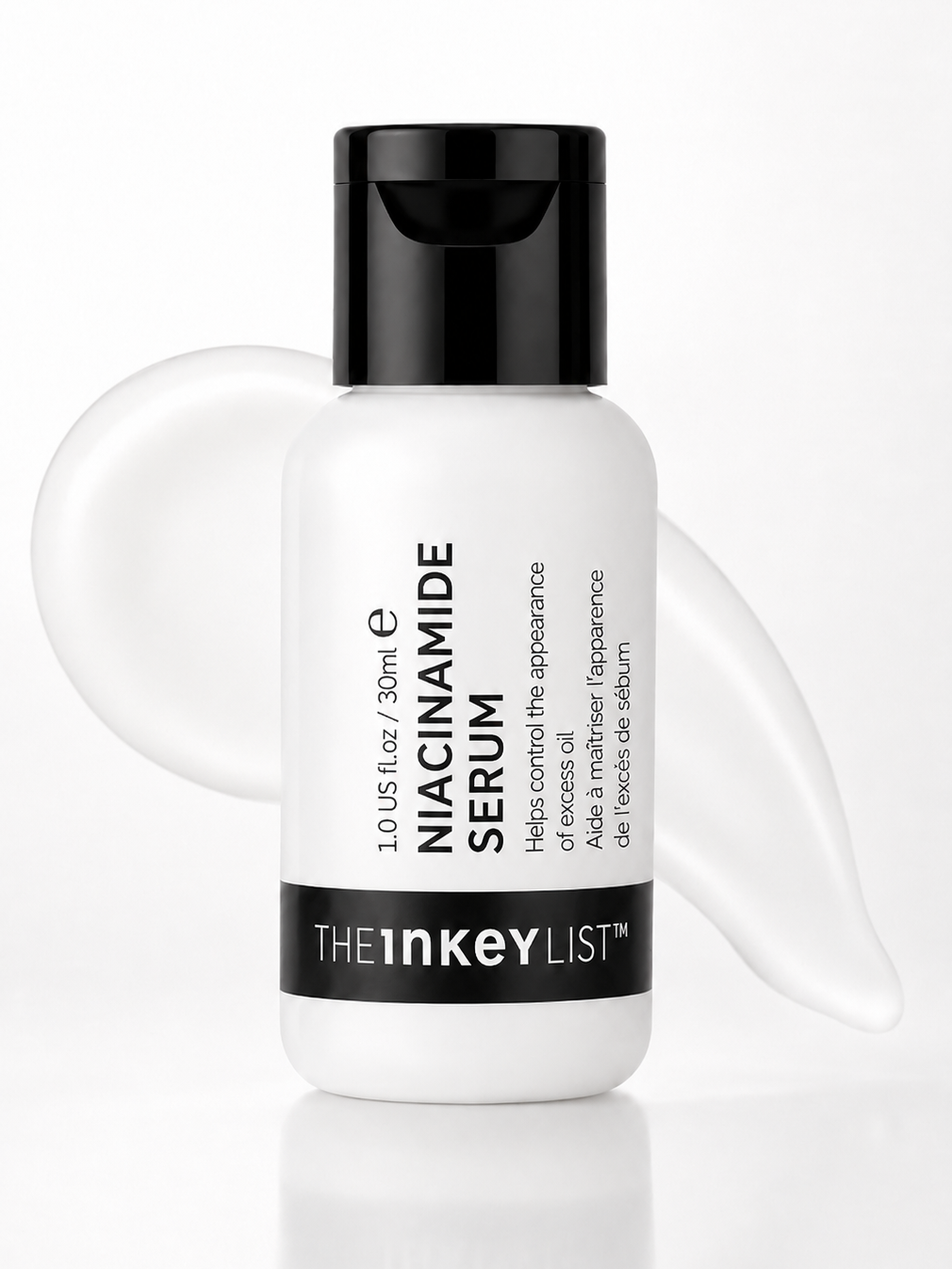
Product pick: The INKEY List 10% Niacinamide Serum.
This is a simple, lightweight option if your T-zone gets shiny but your cheeks still need something gentle and hydrating. It fits combination skin well because it supports oil balance without turning the routine into something aggressive. If your skin is very reactive, start a few times a week instead of using it daily right away.
Do not use every active in the same routine. Combination skin often gets worse when the oily areas are treated too aggressively and the dry areas are ignored.
If you want to understand niacinamide better, read: Niacinamide: What it does for your skin and how to use it the right way. If clogged pores are your main concern, this explains how to use salicylic acid without overdrying your skin: Salicylic Acid for Beginners: How to use it without overdrying.
Step 4: Moisturizer
Moisturizer is where combination skin needs the most customization. You want enough hydration for the cheeks, but not so much richness that your T-zone feels greasy.
For most combination skin types, a lightweight lotion, gel-cream, or water-cream works best. These textures hydrate without feeling heavy.
If your cheeks are noticeably dry, use a little more moisturizer there and less on the forehead, nose, and chin. Your whole face does not always need the same amount of product.
What to look for: glycerin, hyaluronic acid, ceramides, panthenol, squalane, niacinamide, and lightweight emollients.
Avoid very heavy creams all over the face unless your combination skin leans more dry than oily. If your skin barrier feels weak, tight, or reactive, simplify the routine before adding more actives.
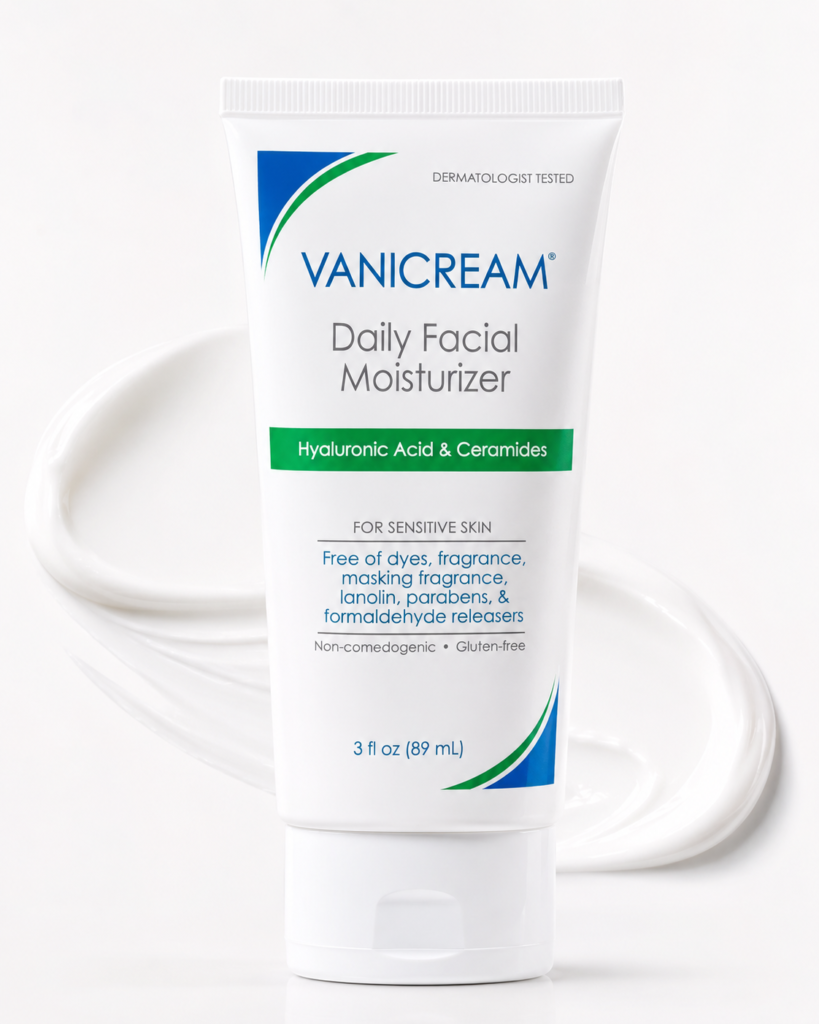
Product pick: Vanicream Daily Facial Moisturizer.
This is a good option when your skin needs hydration and barrier support without a heavy finish. It works well for combination skin because it is lightweight enough for daytime, but still comforting on areas that feel dry or sensitive.
Step 5: SPF
Sunscreen is non-negotiable for combination skin, but texture matters. Very matte sunscreens can make the cheeks feel dry, while very dewy sunscreens can make the T-zone look greasy.
The best SPF for combination skin is usually lightweight, hydrating, and natural-finish rather than extremely matte or very glowy.
What to look for: lightweight fluid or gel-cream textures, a non-greasy finish, no heavy residue, and enough hydration that your cheeks do not feel tight.
Apply enough sunscreen evenly across the whole face. Do not use less SPF on oily areas just to reduce shine. If your T-zone gets shiny later, use blotting paper or a light powder instead.
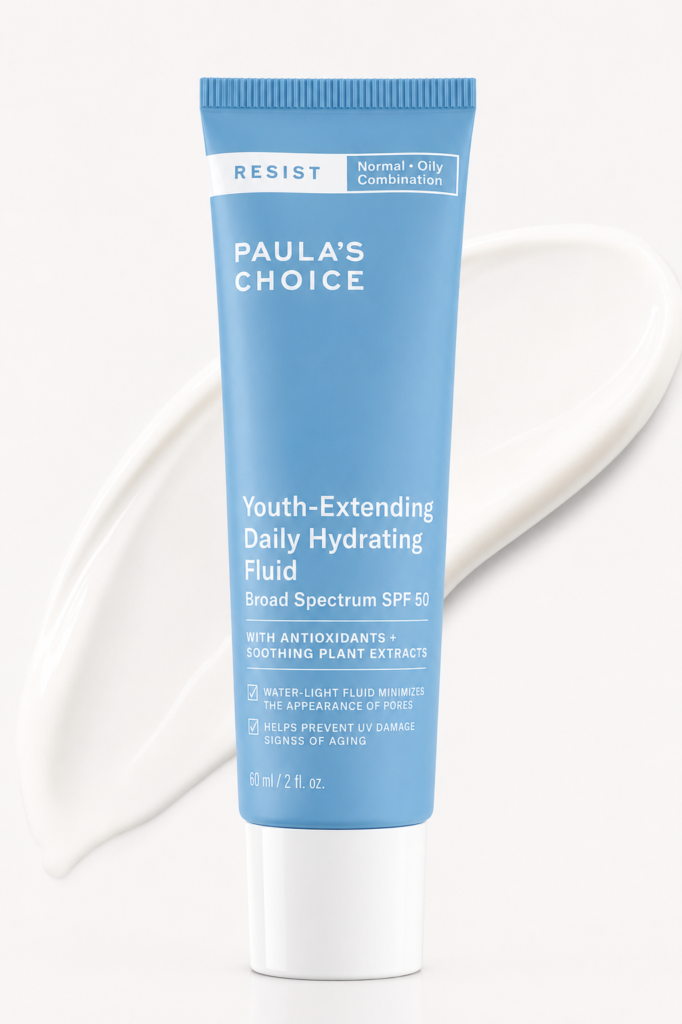
Product pick: Paula’s Choice RESIST Youth-Extending Daily Hydrating Fluid SPF 50.
This is a strong match for combination skin because it has a lightweight fluid texture and a satin-matte finish that does not feel heavy or greasy. It is the kind of sunscreen that works well when your T-zone gets shiny but you still want your cheeks to feel comfortable.
If your skin is also acne-prone, this guide can help: Best Sunscreens for Oily and Acne-Prone Skin in 2026.
Morning Routine for Combination Skin
Your morning routine should focus on light hydration, oil balance, and sun protection.
Simple AM routine:
Gentle cleanser or water rinse.
Hydrating toner or essence.
Niacinamide or vitamin C serum.
Lightweight moisturizer.
SPF.
If your T-zone gets oily, use less moisturizer there. If your cheeks feel dry, add a little more moisturizer only to those areas.
Evening Routine for Combination Skin
Your evening routine should focus on cleansing properly, treating only what needs treating, and supporting the barrier.
Simple PM routine:
First cleanse if you wore sunscreen or makeup.
Gentle cleanser.
Hydrating toner or essence.
Treatment serum.
Lightweight moisturizer.
On salicylic acid nights, apply it mainly where you get clogged pores. On retinol nights, keep the rest of the routine simple. On rest nights, skip strong actives and focus on hydration.
A simple weekly rhythm could look like this:
Niacinamide night: Cleanser → Hydrating toner → Niacinamide → Moisturizer.
Salicylic acid night: Cleanser → Salicylic acid on T-zone → Moisturizer.
Retinol night: Cleanser → Retinol → Moisturizer.
Rest night: Cleanser → Hydrating toner → Moisturizer.
You do not need all of these actives at once. Pick what matches your skin concerns and build slowly.
Common Mistakes with Combination Skin
Using harsh cleansers to control oil.
This may reduce shine temporarily, but it can leave the cheeks tight and the barrier weaker.
Skipping moisturizer.
Oily areas still need hydration. The trick is not skipping moisturizer, but choosing the right texture.
Applying strong actives everywhere.
If your nose has blackheads, your cheeks do not automatically need salicylic acid every night. Use actives where they make sense.
Choosing products only for oily skin.
Combination skin is not the same as fully oily skin. If every product is mattifying or acne-focused, the drier areas may become irritated.
Changing everything at once.
If you change your cleanser, serum, moisturizer, and SPF in the same week, it becomes impossible to know what helped or what caused irritation.
How Long Until Combination Skin Looks More Balanced?
You can often feel a difference within one to two weeks, especially if you switch away from harsh cleansers or overly heavy creams. Your skin may feel less tight after washing and less greasy by midday.
For visible changes in congestion, shine, texture, or pores, give your routine at least four to six weeks. If you are using salicylic acid or retinol, results take time, and too much too soon usually makes things worse.
If your skin suddenly feels stingy, raw, flaky, or reactive to products it used to tolerate, the issue may be a damaged barrier rather than combination skin alone. This guide explains what to look for: How to Know If Your Skin Barrier Is Damaged and How to Fix It.
The Bottom Line
Combination skin does not need a complicated routine. It needs a flexible one.
Cleanse without stripping. Hydrate lightly. Treat clogged pores only where they happen. Moisturize more where your skin feels dry and less where it gets oily. Apply enough SPF evenly every morning.
Once you stop treating your whole face like one skin type, combination skin becomes much easier to manage. The goal is skin that feels balanced, comfortable, and consistent.
For a complete step-by-step routine framework, this guide covers the basics: My Simple AM & PM Skincare Routine for Glowing Skin.