
Walking into the skincare aisle, or scrolling through a beauty website is one of the most overwhelming experiences in this whole space. There are thousands of products, hundreds of brands, conflicting marketing claims, and ingredients lists that read like chemistry papers. Most people end up buying based on packaging, price, or whatever an algorithm pushed in front of them and then wonder why their skin doesn’t improve.
The good news is that choosing the right products doesn’t require a chemistry degree or hours of research per purchase. It requires understanding what your skin is, what it actually needs, and how to read a product label well enough to know if a formula delivers on what it promises. This guide walks through exactly that step by step.
Affiliate disclosure: This post contains affiliate links. As an Amazon Associate, I earn from qualifying purchases at no extra cost to you.
Step 1: Identify Your Skin Type
This is the foundation of every other decision you’ll make about skincare. Get this wrong, and even excellent products will work against you.
Oily Skin
Skin that produces a lot of sebum, especially in the T-zone. Pores are usually visible, makeup tends to slide or break down through the day, and the skin can look shiny within hours of cleansing. Oily skin is also more prone to congestion and breakouts.
Dry Skin
Skin that produces too little sebum. It feels tight after cleansing, can flake or look rough, and often struggles to hold onto hydration even after applying moisturizer. Dry skin is a long-term skin type, often genetic, and benefits from richer formulas and gentler cleansers.
Combination Skin
The most common skin type. Oily through the T-zone – forehead, nose, and chin, but normal or dry through the cheeks. Combination skin needs balanced products that hydrate without being heavy.
Sensitive Skin
Skin that reacts easily, stings when products are applied, flushes without obvious reason, or breaks down with ingredients others tolerate fine. Sensitivity can be a long-term trait or something that develops from over-exfoliating, harsh products, or barrier damage.
Normal Skin
Balanced not particularly oily, not particularly dry, not particularly reactive. Normal skin tolerates a wider range of products and routines without issue.
Important: Skin type can change with age, climate, and stress. The skin type you had at 20 may not be the skin type you have at 35. Reassess every couple of years rather than assuming it stays the same forever.
Step 2: Identify Your Skin Concerns
Skin type tells you what your skin is. Skin concerns tell you what you want to address. Most people have one or two main concerns at any given time trying to address all of them with every product is what leads to overstacked, irritating routines.
The most common concerns and the ingredients that address them:
Dullness or uneven tone – vitamin C, niacinamide, exfoliating acids.
Breakouts and congestion – salicylic acid (BHA), niacinamide, retinol.
Post-acne marks – vitamin C, niacinamide, retinol, daily SPF.
Fine lines and texture – retinol, peptides, vitamin C, hyaluronic acid.
Dehydration – hyaluronic acid, glycerin, ceramides.
Sensitivity and reactivity – barrier-repair ingredients (ceramides, panthenol, fatty acids), low-fragrance formulas.
Match your products to your top one or two concerns. Trying to address all of them at once means none get addressed properly.
Step 3: Learn to Read an Ingredients List
This is the skill that separates people who consistently buy products that work for them from people who waste money on hyped formulas that don’t deliver.
How Ingredients Are Listed
Ingredients on skincare products are listed by concentration, from highest to lowest. The first five to seven ingredients make up the majority of the product anything below the 1% mark is typically present in trace amounts. This means active ingredients listed near the bottom of a long ingredient list are present in concentrations too low to do much.
Star Ingredients vs. Filler
When a product markets itself around an active ingredient: vitamin C, retinol, niacinamide that ingredient should appear in the top half of the list to be effective. If it’s the third-to-last ingredient, it’s there for marketing, not function.
What to Watch For
Fragrance. Listed as “fragrance,” “parfum,” or as specific essential oils (lavender, citrus, rose). One of the most common causes of skin reactions, especially for sensitive or barrier-compromised skin.
Alcohol. Specifically denatured alcohol (alcohol denat., SD alcohol). High up on the ingredients list, it’s drying and disruptive to the barrier. Fatty alcohols (cetyl, stearyl, cetearyl) are different they’re moisturizing and not a concern.
Sulfates in cleansers. SLS and SLES are common in foaming formulas and can be too stripping for many skin types, especially dry or sensitive skin.
Active concentrations. Vitamin C is most effective at 10–20% L-ascorbic acid. Retinol concentrations of 0.1–1% are the standard range. Niacinamide is most studied at 5–10%. If a product doesn’t list its active concentration, that’s often a sign it’s lower than you’d want.
Step 4: Match the Product to Your Skin Type
Different skin types need different formula textures and ingredient profiles, even when targeting the same concern.
Cleanser
- Oily skin: gel or low-foaming cleansers, can include salicylic acid or zinc
- Dry skin: cream or milk cleansers, glycerin and ceramide-based
- Combination skin: gentle gel or hybrid formulas
- Sensitive skin: fragrance-free cream cleansers, no sulfates
- Normal skin: any well-formulated gentle cleanser
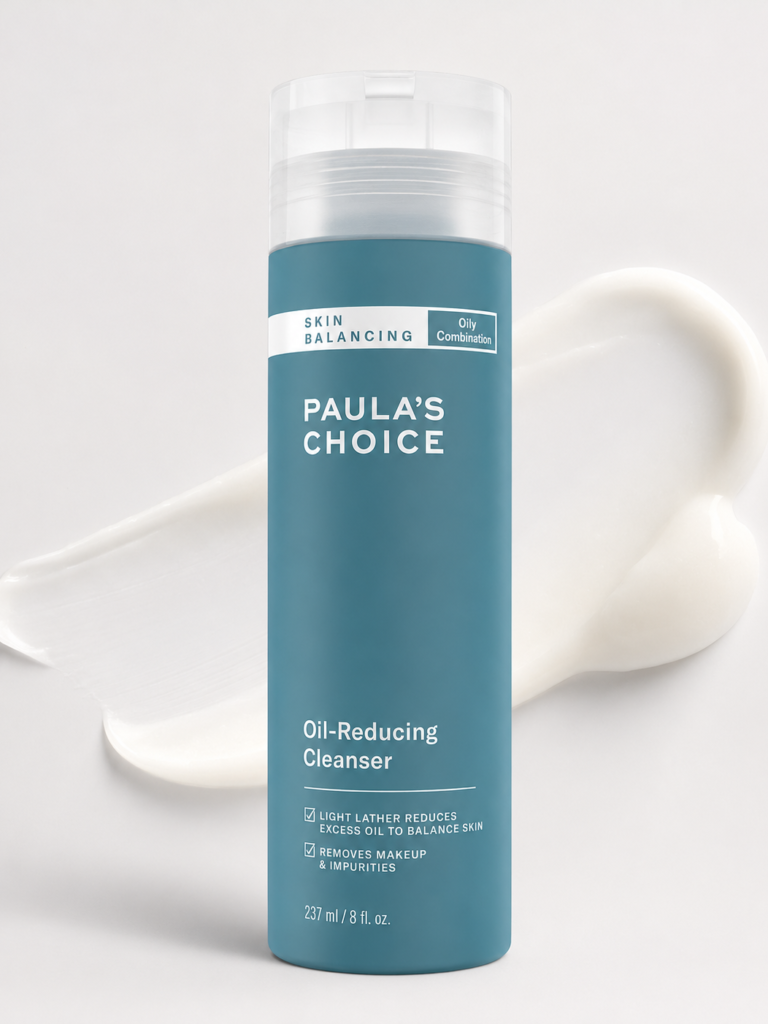
The cleanser I use most consistently across skin types is Paula’s Choice Skin Balancing Oil-Reducing Cleanser gentle enough for sensitive skin, effective enough for combination, and never leaves any tightness afterward.
If your main concern is oiliness, clogged pores, or breakouts, my guide to the best cleansers for oily and acne-prone skin can help you compare gentler options that cleanse without stripping your skin.
Moisturizer
- Oily skin: lightweight gels, oil-free formulas, niacinamide or hyaluronic acid bases
- Dry skin: rich creams, ceramides, fatty acids, occlusive ingredients
- Combination skin: medium-weight lotions, balanced formulas
- Sensitive skin: fragrance-free, simple ingredient lists, ceramides and panthenol
- Normal skin: flexibility most moisturizers will work, choose by texture preference
If your skin feels tight, reactive, or easily irritated, start with a barrier-supportive formula first – this guide to the best moisturizers for damaged skin barrier is a better place to begin than chasing strong actives.
Serum
Serums target specific concerns rather than skin type. Choose based on what you’re trying to address vitamin C for tone, niacinamide for barrier and oil regulation, hyaluronic acid for hydration, retinol for texture and aging.
SPF
- Oily skin: lightweight fluids, gel formulas, matte finishes
- Dry skin: hydrating cream sunscreens with glycerin or hyaluronic acid
- Sensitive skin: mineral SPF (zinc oxide, titanium dioxide), fragrance-free
- Combination skin: lightweight fluids or hybrid formulas
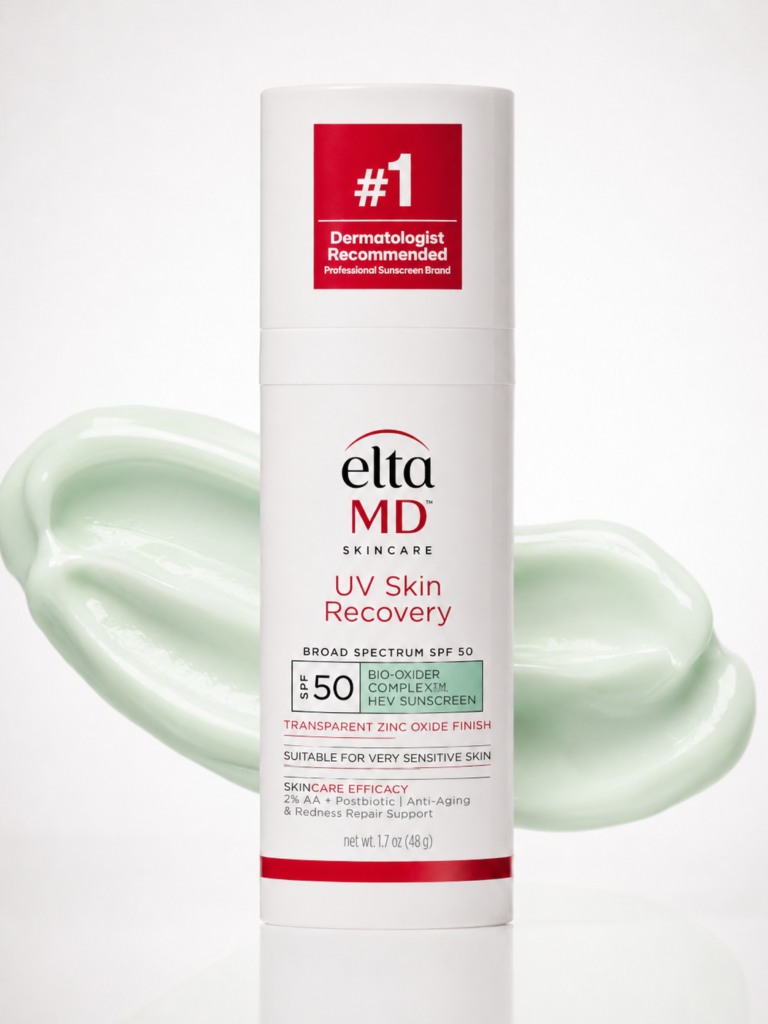
The SPF I use every morning is EltaMD UV Skin Recovery Face Sunscreen lightweight, no white cast, layers well under everything, and works across most skin types.
For a complete breakdown of how to choose and use sunscreen: SPF for Beginners: How to Choose and Use Sunscreen Every Day.
Step 5: Consider Compatibility with Other Products
A product can be excellent on its own and still be wrong for you if it conflicts with what’s already in your routine.
Active ingredient stacking. Using retinol and exfoliating acids in the same routine, or layering multiple actives across morning and evening, often creates more irritation than benefit. The full breakdown of how to combine the most common actives is here: How to Layer Niacinamide, Vitamin C, and Retinol Without Conflict.
Texture order. Lightweight products go before heavy ones. A serum applied over moisturizer can’t penetrate properly. The complete layering logic: Skincare Routine Order: How to Layer Your Products the Right Way.
Format duplication. If your moisturizer already contains hyaluronic acid, glycerin, and niacinamide, you don’t need a separate hyaluronic acid serum and a niacinamide serum on top. Look at what your products already give you before adding more.
Common Product-Buying Mistakes
Buying based on hype. A product going viral on social media doesn’t mean it’s right for your skin. The best-selling vitamin C serum may be too harsh for sensitive skin, and the trendy retinol may be too strong for a beginner. Hype is not a substitute for fit.
Buying based on price. Both directions are mistakes. Expensive doesn’t mean better many drugstore formulas outperform luxury ones for certain ingredients. If you want a practical starting point, this guide breaks down the best affordable formulas worth considering: Best Drugstore Skincare Products That Are Actually Worth Buying in 2026.
Buying too many products at once. Building a routine all in one shopping trip means you can’t tell what’s working and what isn’t. Build slowly one product at a time, give it three to four weeks, then add the next.
Switching products too quickly. Most skincare ingredients need six to eight weeks of consistent use to show meaningful results. Abandoning a product after two weeks because you’re not seeing dramatic changes is one of the most common reasons people feel like nothing works for their skin.
Ignoring formulation when chasing ingredients. A product with vitamin C as the eighteenth ingredient isn’t a vitamin C serum, regardless of what the marketing says. Look at where the active is in the list, not just whether it’s present.
For a fuller breakdown of the habits that quietly undermine skincare results, this covers the most common ones: Skincare Mistakes That Are Ruining Your Glow.
A Practical Buying Framework
When you’re considering a new product, these are the questions worth running through:
- Does it match my skin type’s texture needs?
- Does it address one of my top concerns directly?
- Are the active ingredients in the top half of the list?
- Does it conflict with anything else in my current routine?
- Have I given my current product enough time to evaluate, or am I switching too soon?
If you can answer those five questions confidently in favor of the new product, it’s worth trying. If two or three of them are uncertain, it’s probably not the right purchase yet.
What I’d Tell a Friend
Choosing the right skincare products isn’t about finding the most-hyped formula or the latest viral trend. It’s about understanding what your skin is, what it needs, and learning to read enough of the label to tell whether a product can deliver on what it promises.
Match the formula to your skin type. Match the actives to your top concerns. Read where the ingredients fall in the list. Build slowly and give products time to work. That’s the entire framework and it consistently produces better results than the alternative of chasing every new launch.