
Anti-aging is one of the most overhyped, most confusingly marketed corners of skincare. Walk into any store and you’ll find creams promising to reverse years, serums claiming to rebuild collagen overnight, and ingredient lists that read like science fiction. Most of it is either oversold or simply doesn’t deliver what the packaging suggests.
The reality is that effective anti-aging skincare is built on a small set of well-researched ingredients used consistently over time. It doesn’t reverse what’s already happened, but it slows what’s coming, protects what’s there, and supports the skin’s own ability to look firmer, smoother, and more even-toned for longer.
This guide is for anyone who’s thinking about starting an anti-aging routine, whether you’re 25 and wondering if it’s too early, 45 and worried it’s too late, or somewhere in between trying to figure out what actually matters. Spoiler: neither is true, and the answer depends less on age than on what you’re doing now.
If you’re not sure which ingredients matter most, start here Best anti-aging ingredients that actually work.
Affiliate disclosure: This post contains affiliate links. As an Amazon Associate, I earn from qualifying purchases at no extra cost to you.
When Should You Start an Anti-Aging Routine?
This is the question most people ask, and the honest answer surprises most of them.
The single most effective anti-aging step you can take is daily SPF and that’s relevant at every age. Sun damage accounts for roughly 80% of visible skin aging. Whether you’re 22 or 52, daily broad-spectrum sunscreen is the foundation of every anti-aging routine that actually works.
Beyond SPF, here’s a realistic framework:
Mid-to-late 20s: Most people benefit from adding antioxidants (vitamin C) and a focus on hydration and barrier support. Retinol can be introduced here, but it’s not urgent, barrier health matters more than aggressive treatment.
30s: This is when cell turnover starts slowing and where retinol becomes genuinely useful, along with continued antioxidant protection and possibly peptides. Routine consistency matters more than complexity.
40s and beyond: Retinol, peptides, vitamin C, hydration, and SPF form the core. Stronger concentrations and more targeted treatments can be introduced based on individual concerns.
The bigger principle: starting late is not too late. The skin responds to good care at any age. Starting at 50 with consistent SPF, retinol, and hydration produces real, visible results just on a slower timeline than starting at 30.
The Core of an Anti-Aging Routine
There are four pillars to every effective anti-aging routine. Everything else is optional or supplementary.
1. Daily Broad-Spectrum SPF
This is non-negotiable. If you do only one anti-aging step, this is it. UV damage drives the majority of visible aging: fine lines, uneven tone, loss of firmness, dark spots and it accumulates every day without protection.
Broad-spectrum SPF 30 minimum, ideally SPF 50, applied every morning regardless of weather or season. For a complete breakdown of how to choose and use SPF correctly: SPF for beginners: How to choose and use sunscreen every day.
2. Retinol (or a Retinoid)
Retinol is the most well-researched ingredient available without a prescription for visible signs of aging. It accelerates cell turnover, supports collagen production, fades pigmentation, improves texture, and reduces fine lines, all backed by decades of clinical evidence.
The catch is that retinol takes patience and careful introduction. Visible results require eight to twelve weeks minimum of consistent use, and starting too aggressively causes irritation that often makes people give up before they see anything. For the full guide on introducing retinol without irritation: Retinol for beginners: How to start without irritation.
3. Antioxidants (Vitamin C First)
Antioxidants neutralize the free radical damage from UV exposure, pollution, and environmental stress that would otherwise break down collagen and cause uneven pigmentation. Vitamin C is the most studied and most effective.
Used every morning, vitamin C amplifies SPF protection, gradually fades pigmentation, and brightens overall tone. For how to introduce it without irritation: How to use vitamin C serum without irritating your skin.
4. Barrier Support and Hydration
The skin barrier weakens with age, and a compromised barrier shows up as dryness, flatness, reactivity, and skin that loses moisture quickly. Supporting it consistently with ceramides, hyaluronic acid, niacinamide, and properly formulated moisturizers is one of the most underrated anti-aging steps.
Niacinamide deserves a specific mention here. It supports barrier health, reduces redness, evens tone, regulates oil, and minimizes pore appearance, all without irritation. For the full breakdown: Niacinamide: What it does for your skin and how to use it the right way.
A Realistic Anti-Aging Routine – Step by Step
Morning Routine
- Gentle cleanser (or rinse with lukewarm water if your skin is dry or sensitive)
- Vitamin C serum – applied to dry skin, allowed to absorb for a minute
- Niacinamide (optional, can be layered with vitamin C, modern formulas tolerate this combination well)
- Moisturizer – formulated for your skin type, with hydrating and barrier-supportive ingredients
- Broad-spectrum SPF 50 – always the last step
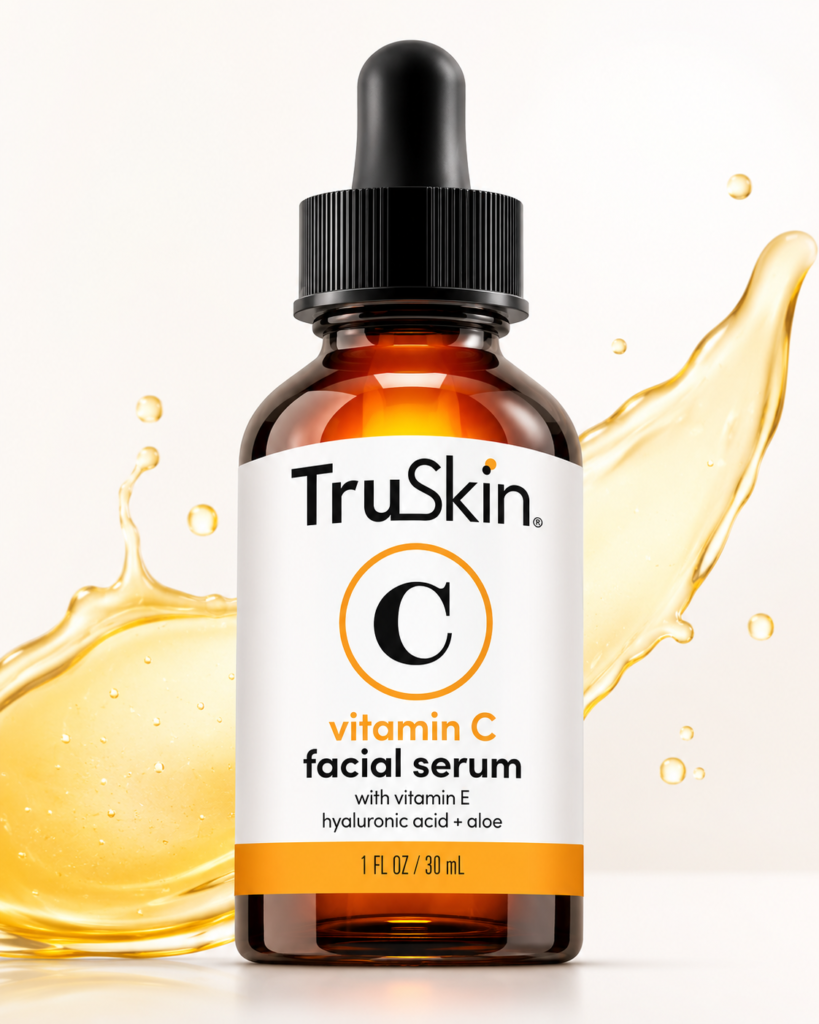
The vitamin C I use every morning is TruSkin Vitamin C Serum, a formula gentle enough for daily use without overwhelming the skin, and it’s made a visible difference in how even my tone looks over time.
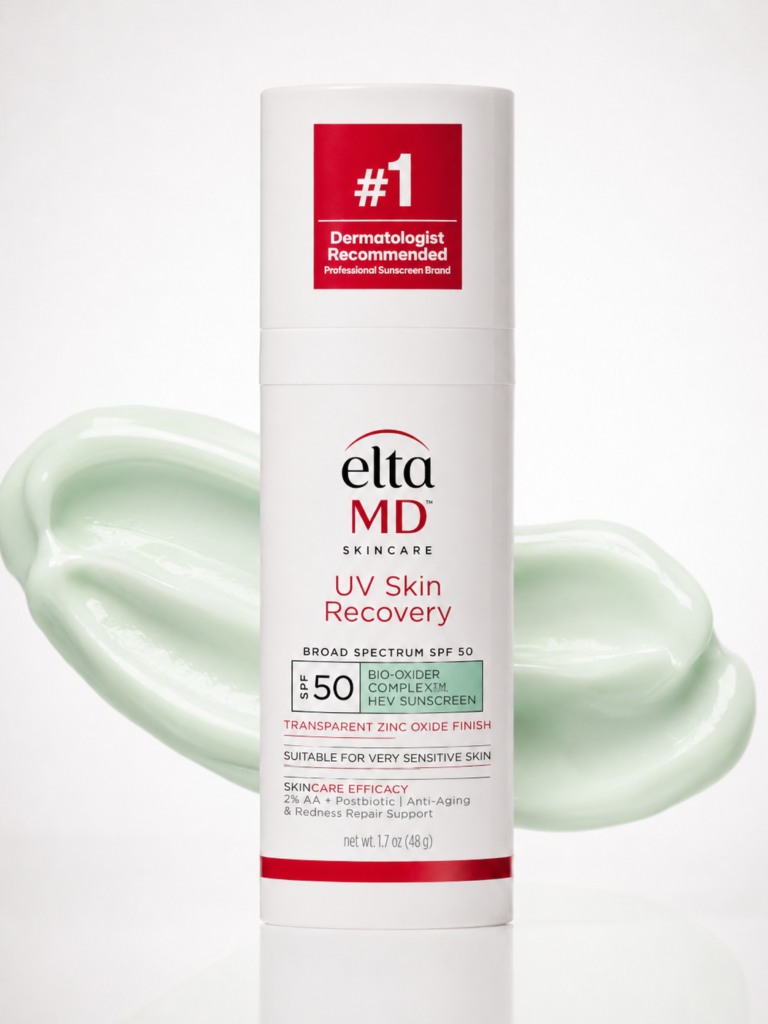
The SPF I rely on every morning is EltaMD UV Skin Recovery Face Sunscreen, lightweight, no white cast, and it layers well over everything underneath without disrupting it.
For oily or acne-prone skin, I have a separate guide to the best sunscreens for oily and acne-prone skin that feel lighter, less greasy, and easier to wear every day.
Evening Routine
- Cleanser – double cleanse if you’ve worn SPF or makeup (oil-based first, then your regular cleanser)
- Hydrating toner or essence (optional, useful for dry or dehydrated skin)
- Retinol – start two to three nights a week, build up to four or five nights as tolerated
- Moisturizer – richer than morning, with ceramides and barrier-supportive ingredients
On nights you skip retinol, swap in a niacinamide serum or another gentle supportive product. Rest nights, just cleanser and moisturizer are also valuable, especially when introducing retinol.
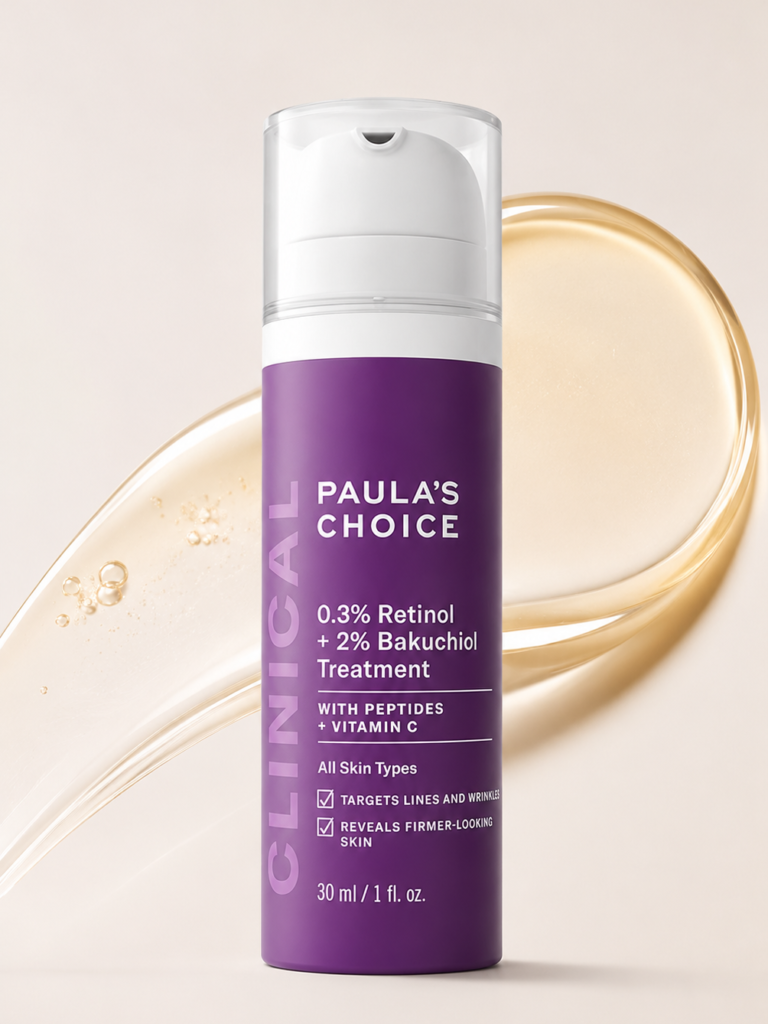
The retinol I use is Paula’s Choice CLINICAL 0.3% Retinol combined with bakuchiol, gentle enough to introduce slowly and effective enough to deliver real results over time without aggressive irritation.
If you want a more beginner-friendly option, I also put together a guide to the best retinol products for beginners.
What About Peptides, Growth Factors, and Other Trendy Ingredients?
Anti-aging skincare has a long history of trendy ingredients that promise dramatic results: peptides, growth factors, exosomes, stem cells, and others.
Peptides are short chains of amino acids that signal the skin to perform specific functions, including collagen production. Evidence for topical peptides is more modest than retinol or vitamin C, but they’re well-tolerated and can be a useful addition once your core routine is established.
Growth factors and exosomes are emerging categories with promising early research, but the products on the market are often expensive and the evidence for at-home use is still developing.
Bakuchiol is marketed as a “natural retinol alternative.” Research suggests it has mild benefits but it’s not a true substitute for retinol. It can be useful for sensitive skin that doesn’t tolerate retinoids well.
The honest answer is that the four core ingredients above will deliver more results than any trendy ingredient layered on top. Build the foundation first. Add specialty ingredients later if you want to, but don’t expect them to replace what retinol, vitamin C, SPF, and barrier support do.
How to Combine Anti-Aging Actives Without Irritation
The most common mistake people make when starting an anti-aging routine is layering too many strong actives at once and ending up with a damaged barrier instead of glowing skin. The general rule: never use two strong actives in the same session – vitamin C in the morning, retinol at night, with niacinamide and hydration in between. For the full breakdown of how to layer the most common actives without conflict: How to layer niacinamide, vitamin C, and retinol without conflict.
What Doesn’t Work (And What Makes Things Worse)
Collagen creams that claim to “rebuild collagen.” Collagen molecules are too large to penetrate the skin from a topical cream. Ingredients that stimulate your skin’s own collagen production: retinol, vitamin C, peptides, are the ones that actually do something.
Anti-aging products with high alcohol or fragrance content. Many luxury anti-aging products contain high concentrations of alcohol or fragrance, both of which damage the barrier over time. A damaged barrier ages the skin faster, not slower.
Overusing strong actives. Retinol every night, AHA every other night, vitamin C every morning, and a brightening mask on weekends is too much for almost any skin. The result is barrier damage that looks worse than not using any of them.
Skipping moisturizer because “it’ll make my skin lazy.” This is a myth. Skin doesn’t get lazy. A well-hydrated barrier ages slower than a chronically dry one.
Treating anti-aging as a sprint. Most effective ingredients require months of consistent use to show meaningful results. Switching products every three weeks because “nothing is working” means you never give anything time to actually work.
For a fuller breakdown of habits that quietly undermine results, this covers the most common ones: Skincare mistakes that are ruining your glow.
How Long Until You See Results?
Surface improvements, better hydration, smoother texture, slightly more even tone, typically show up within four weeks. Meaningful improvements in fine lines, pigmentation, and firmness require eight to twelve weeks of consistent retinol and vitamin C use. The most significant cumulative results compound over six to twelve months.
The most important factor across every timeline is consistency. Anti-aging skincare is one of the clearest examples of compound effects, small daily actions over months produce more visible results than dramatic short-term efforts.
What I’d Tell a Friend
You don’t need a complicated routine to address aging skin. You need four things: daily SPF, retinol introduced carefully, daily vitamin C, and consistent hydration with barrier support. That’s the whole framework.
Don’t get distracted by trendy ingredients or expensive luxury formulas before you’ve built that foundation. Don’t expect overnight changes. Don’t compare your week three to someone else’s year three.
Start with SPF if you’re not already wearing it daily. Add vitamin C in the morning when you’re ready. Introduce retinol slowly when your skin is stable. Keep your moisturizer simple and effective. Give the process months, not weeks.
That’s what works, not for one age group, but at every age.
For a complete morning and evening routine framework that ties everything together, this My simple AM & PM skincare routine for glowing skin is the right place to start. And if you’re not sure which products to buy first, this guide walks through exactly how to choose them: How to choose the right skincare products for your skin.