

PDRN and peptides often appear in skincare products making similar promises: more hydration, smoother texture and firmer-looking skin.
That can make them sound like two versions of the same ingredient, but they are quite different.
PDRN is made from DNA fragments, while peptides are short chains of amino acids. They also come with different strengths and limitations.
For fine lines and firmness, peptides are usually the more conventional topical skincare choice. PDRN makes more sense when you want a hydrating, skin-conditioning serum and are interested in trying a newer ingredient.
Neither is automatically better. The right choice depends on your main concern and the rest of the formula.
Affiliate disclosure: This post contains affiliate links. As an Amazon Associate, I earn from qualifying purchases at no extra cost to you.
What Is PDRN?
PDRN stands for polydeoxyribonucleotide. It is a mixture of purified DNA fragments traditionally obtained from salmon or trout.
The ingredient first became known through medical and professional applications connected with tissue repair. It later moved into cosmetic serums, creams, masks and other leave-on products.
This distinction matters because an ordinary serum is not the same as an injectable treatment. Reviews of PDRN research describe the ingredient as promising, but the available evidence covers very different products, delivery methods and molecular sizes. Results from professional treatments cannot automatically be applied to every cosmetic serum.
Our guide to what PDRN is in skincare explains its potential benefits and current limitations in more detail.
What Are Peptides?
Peptides are short chains of amino acids, which are the building blocks used to form proteins.
In skincare, different peptides are used for different purposes. Some are included in products aimed at firmness and fine lines, while others are used for hydration, soothing or general skin conditioning.
This means that “peptide serum” is a very broad description. Copper peptides, signal peptides and acetyl hexapeptides should not be expected to work in exactly the same way.
Peptides have been used in topical cosmetics for longer than PDRN, but the quality of evidence varies. A recent systematic review found modest improvements in some signs of skin aging, although the stronger results were largely driven by oral rather than topical peptide products. Research into individual topical peptides is encouraging, but penetration and formulation remain important limitations.
PDRN vs Peptides: The Main Difference
The simplest comparison is:
PDRN is a mixture of DNA fragments. In cosmetic products, it is usually promoted for hydration, skin comfort, elasticity and a smoother appearance.
Peptides are amino-acid chains. Their purpose depends on the specific peptide, but they often appear in products targeting fine lines, texture, firmness and hydration.
Neither name tells you how effective the finished product will be.
A well-formulated peptide serum may be more useful than a poorly designed PDRN product. A hydrating PDRN serum may feel better than a peptide formula that does not suit your skin.
The ingredient list and texture matter more than whichever term is printed in the largest letters on the bottle.
Which Is Better for Hydration?
There is no clear winner.
Most of the immediate hydration you get from either type of serum often comes from familiar supporting ingredients such as:
glycerin;
hyaluronic acid;
betaine;
panthenol;
amino acids;
lightweight emollients.
Many PDRN serums are designed to leave a dewy, temporarily plumper finish, which makes them appealing for dehydrated skin.
Peptide serums can provide similar hydration when they contain effective humectants and skin-conditioning ingredients.
Choose according to the complete formula. PDRN or peptides alone do not guarantee that a product will be more moisturizing.
Which Is Better for Fine Lines and Firmness?
Peptides are usually the more established topical option when fine lines and firmer-looking skin are your main priorities.
Certain peptides have been studied for their potential effects on wrinkle depth, elasticity and hydration. However, results depend on the specific peptide, its concentration and whether the formula can deliver it effectively into the skin.
Topical PDRN is also promoted for firmness and skin renewal, but much of the stronger research comes from injections, professional procedures or laboratory models rather than regular over-the-counter serums.
Neither ingredient should replace the basics. Sunscreen and retinoids have clearer roles when photoaging, fine lines and uneven texture are the main concerns. Our guide to the best anti-aging ingredients that actually work explains how the evidence compares.
Which Is Better for Sensitive Skin?
Either can work, but neither is automatically gentle.
The PDRN or peptide ingredient may not be what causes irritation. Fragrance, botanical extracts, retinoids, exfoliating acids or high levels of other active ingredients can matter more.
A simple peptide serum may be more comfortable than a fragranced PDRN ampoule. A straightforward PDRN serum may be easier to tolerate than a peptide product that also contains several strong actives.
Look at the whole ingredient list and introduce one new product at a time.
Can You Use PDRN and Peptides Together?
Yes. They do not generally need to be separated.
Some products already contain both, which can be a practical way to target hydration, dullness and early firmness concerns without adding two separate serums.
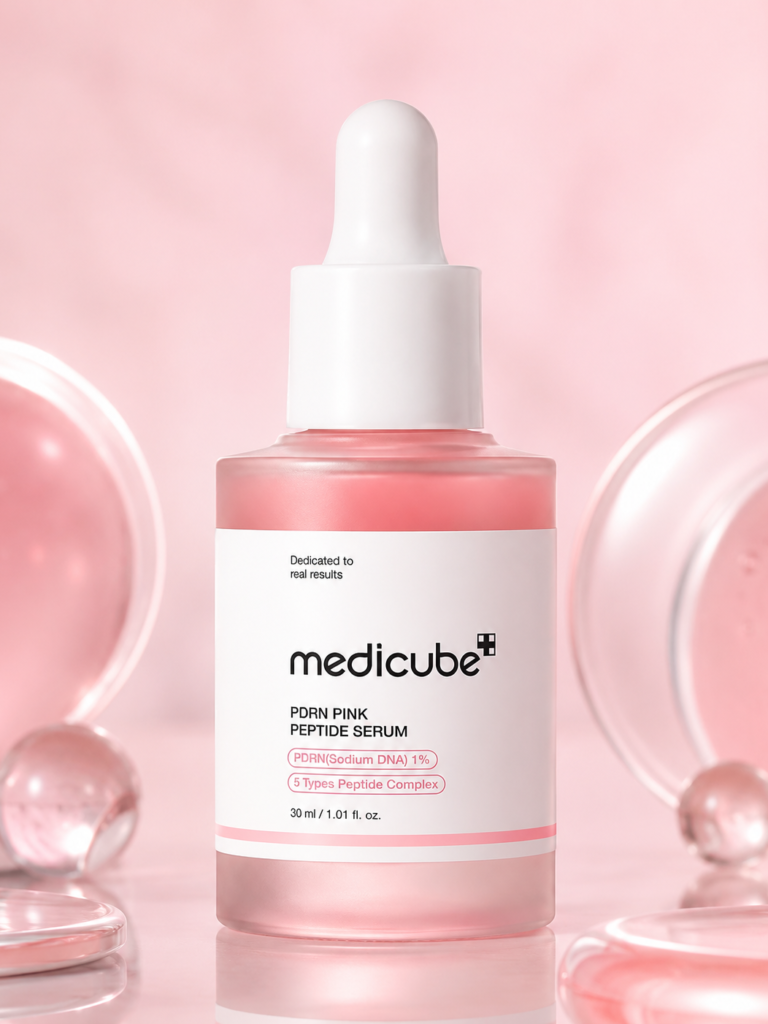
Medicube PDRN Pink Peptide Serum is one example. The Salmon DNA version combines Sodium DNA with niacinamide and several peptides in a lightweight serum intended for dry, dull and less firm-looking skin.
Medicube also offers a separate Rose PDRN Vegan variation, so make sure the Amazon option you select matches the version being described.
A combined formula can simplify your routine, but it is not automatically more effective simply because it contains both ingredient categories.
You can compare more options in our guide to the best Korean PDRN serums in 2026.
What If You Only Want Peptides?
A peptide-focused product may make more sense when you are not interested in PDRN or prefer to avoid fish-derived ingredients.

COSRX The 6 Peptide Skin Booster Serum contains six peptide ingredients, along with niacinamide, sodium hyaluronate, amino acids, betaine and allantoin. It has a watery, toner-like texture and is intended to be used as the first leave-on step after cleansing.
This is better described as a lightweight peptide booster than a rich, concentrated treatment serum. It may suit someone who wants an easy first layer before moisturizer or another treatment.
Should You Choose PDRN or Peptides?
Choose PDRN if:
You want a hydrating, skin-conditioning serum and are interested in trying a newer Korean skincare ingredient.
It may suit skin that feels dehydrated, looks dull or temporarily lacks a plump appearance.
Check the source before buying. Many traditional PDRN products are fish-derived and are not vegan.
Choose peptides if:
Fine lines, uneven texture or firmer-looking skin are your main concerns.
Peptides may also suit someone who wants a gentler supporting product without introducing a retinoid. Just remember that different peptides have different purposes, and a longer peptide list does not automatically mean better results.
Choose a product containing both if:
You want one serum that combines hydration with ingredients aimed at smoother and firmer-looking skin.
There is usually no need to layer separate PDRN and peptide serums unless each one has a clearly different role.
Can PDRN or Peptides Replace Retinol?
Not directly.
PDRN and peptide products may feel easier to tolerate, but they do not have the same level or type of evidence as retinoids for photoaging and fine lines.
They can still be useful when your skin does not tolerate retinol or when you want a supportive hydrating product. The expected results will usually be gentler and more subtle.
Our retinol guide for beginners explains how to introduce a retinoid gradually without overwhelming your skin.
How to Use PDRN and Peptide Serums
Apply the product after cleansing and any watery toner or essence, but before moisturizer.
A simple routine could look like this:
Gentle cleanser
Toner or essence, if needed
PDRN, peptide or combined serum
Moisturizer
Sunscreen in the morning
A watery booster such as the COSRX serum can be used immediately after cleansing, before thicker treatments.
There is no need to use several PDRN and peptide products in the same routine. Start with one formula and see whether it adds something your current routine is missing.
The Bottom Line
PDRN and peptides are different ingredients, even though products containing them often make similar claims.
PDRN is the newer and less established topical option. It makes the most sense when you want a hydrating, skin-conditioning serum and understand that research on ordinary cosmetic products is still developing.
Peptides are the more conventional choice for fine lines and firmer-looking skin, but results still depend on the particular peptides and the quality of the formula.
For hydration, either can work. Choose based on the supporting ingredients, texture and how the product fits with what you already use.
Choose the product that fits your main concern and works with the routine you already have.